NFT strategy consulting for global brands entering digital ownership
By Jeremy Ryan, Founder & CEO · September 2026
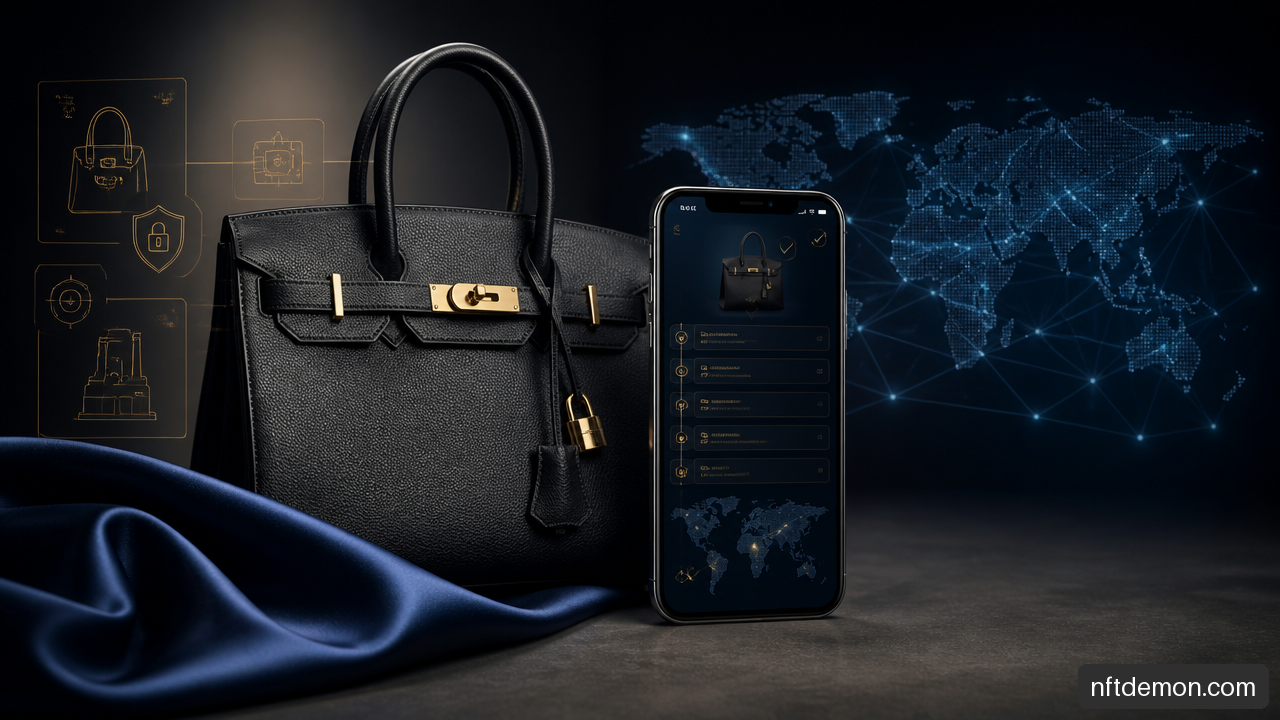
NFT strategy consulting for global brands entering digital ownership is not primarily about launching a collectible. It is about deciding whether a verifiable digital record can improve customer relationships, product authentication, access, loyalty, or resale support more effectively than a conventional campaign. I recommend treating an NFT program as customer infrastructure with a token attached, not a token launch searching for a purpose.
A well-designed program can connect a physical product, digital experience, and customer record across markets. A poorly designed one can create wallet friction, unclear rights, unmanageable support obligations, and claims that marketing cannot substantiate. The distinction is strategic discipline.
Define The Digital Ownership Decision
Start With The Customer Problem, Not The Mint
An NFT is a unique token recorded on a blockchain. For a brand, its practical value comes from what the token proves, enables, or governs. That may be authenticity for a luxury item, admission to an event, eligibility for a loyalty benefit, access to digital content, or registration of a product’s ownership history.
The strategic question is simple: Does the customer need portable, verifiable rights or status that a normal database cannot deliver as credibly? If the answer is no, a conventional loyalty account, QR code, membership ID, or ecommerce benefit may be cheaper and easier to operate.
Digital ownership is strongest where ownership must persist beyond a single campaign or channel. Harvard Business School describes the appeal as greater consumer control over digital assets and the potential to move assets, such as art collections or event tickets, across platforms. That broader ownership proposition can also strengthen continued engagement when the brand makes the benefit meaningful: Harvard Business School’s analysis of cross-platform digital ownership frames the strategic premise clearly.
Consider three common models:
| Model | What The Token Represents | Best Fit | Avoid When |
|---|---|---|---|
| Collectible | A limited digital item, artwork, or cultural artifact | Entertainment, sports, fan communities, limited collaborations | There is no ongoing cultural relevance or collector demand |
| Access Pass | Eligibility for experiences, content, offers, or token-gated access | Events, hospitality, gaming, membership, premium communities | Benefits change frequently and cannot be reliably fulfilled |
| Digital Certificate | Product authenticity, registration, provenance, warranty, or after-sales record | Luxury, resale-sensitive goods, collectibles, high-value products | The product has little resale, service, or authentication value |
These categories should not be blurred. A collectible can be aspirational, but it may raise buyer expectations about scarcity and resale. An access pass needs clear expiration, transfer, and redemption rules. A digital certificate must connect reliably to the physical item; otherwise, it is merely a detached image with a serial number.
Make Utility Specific Enough To Operate
“Exclusive benefits” is not a utility model. It is marketing language. A usable utility model states who receives what, in which territory, during what period, through which verification method, and what happens when the token is transferred or lost.
For example, a global fashion house could issue a product passport with a limited-edition bag. The token may support authentication, ownership registration, repair history, and invitations to future holder events. The customer value is not the mint itself. It is faster servicing, a stronger resale record, and a continuing relationship after checkout.
CXG and Trust-Place position digital ownership and NFT passports as customer-experience infrastructure for premium and luxury brands, particularly around digital certification. Their work illustrates why the certificate model often has more durable commercial logic than a stand-alone art drop: CXG’s discussion of NFT passports and luxury customer experience.
I would define utility in a written service matrix before approving creative. Include these questions:
- What is guaranteed at mint, purchase, or registration?
- What is discretionary and may change over time?
- Can benefits be transferred with the token?
- Does a resale void, renew, or split any benefit?
- Who funds fulfillment after the launch budget closes?
That fifth question prevents a frequent failure mode: a marketing team sells permanent membership language while operations has budgeted only one event.
Choose Ownership Architecture Deliberately
Global brands have a choice between a platform-mediated program and a brand-controlled experience. Neither is universally better.
A marketplace-led launch can reduce time to market and reach existing collectors. The trade-off is less control over customer data, user experience, commercial rules, and the platform’s future roadmap. A brand-hosted experience can unify ecommerce, CRM, loyalty, and customer service, but it requires stronger product ownership, security, vendor oversight, and support capacity.
For mainstream audiences, custodial or embedded wallets can remove the immediate need to manage seed phrases or acquire cryptocurrency. That lowers abandonment at onboarding. It also changes the risk profile. If a provider or brand-managed system controls keys, it must define account recovery, identity verification, access revocation, incident response, and the conditions under which assets can be transferred out.
Fair warning: “frictionless” should not mean “invisible.” Customers should understand whether they control the asset directly, whether a provider holds it for them, and what happens if their email account is compromised.
Build A Global Operating Model
Treat The Launch As A Jurisdiction Program
A global rollout should not assume that one set of terms, tax logic, marketing claims, and token rights works everywhere. Start with a lead market, prove operations, then expand through a structured jurisdiction review.
The following workflow is more useful than a generic legal signoff because it makes localization visible early:
- Select the first market. Evaluate customer demand, payment methods, consumer law exposure, internal support coverage, and local tax complexity.
- Classify the offer. Determine whether the token is primarily a collectible, access entitlement, certificate, or mixed product. Mixed offers require particularly careful terms.
- Map the selling entity. Identify which group company contracts with customers, receives revenue, licenses IP, and handles refunds or disputes.
- Review local claims. Confirm that statements about scarcity, permanence, resale, access, rewards, and authenticity can be substantiated in each market.
- Assess tax and reporting. Examine indirect tax, VAT, revenue recognition, valuation, transfer pricing, and recordkeeping before prices are published.
- Localize delivery. Adapt terms, privacy notices, customer support, age gates, payment flows, language, and redemption logistics.
- Approve expansion gates. Do not expand because the smart contract is technically available. Expand when support, compliance, and utility fulfillment are ready.
The point is not to make every program slow. It is to prevent a country-specific issue from becoming an emergency after thousands of tokens have been distributed.
Resolve IP Before Building Smart Contracts
A smart contract can enforce token behavior. It cannot repair unclear intellectual property rights. Before minting, the brand should document who owns the artwork, trademarks, photography, music, likenesses, character rights, product designs, and underlying digital files. It should also specify the rights granted to the holder.
Ownership of a token does not automatically grant copyright, merchandising rights, commercial-use rights, or the right to create derivatives. Terms should say what the customer receives in plain language. For example: personal display rights only; commercial rights capped at a stated revenue threshold; no right to use brand trademarks; or a limited right to resell the token through approved channels.
Cross-border licensing matters because rights may be owned by different entities in different territories. A global entertainment brand might hold trademark rights centrally while local affiliates hold event rights or talent agreements. If the token promises worldwide access, the legal and operational rights chain must be worldwide too.
Budweiser’s partnership announcement with VaynerNFT showed that brand NFT work can range from consulting and strategic mapping to launch planning and full development. The lesson is not that every brand needs a large production effort. It is that rights, assets, education, and launch mechanics are distinct workstreams: Budweiser’s VaynerNFT launch-support announcement provides a concrete example of that range.
Define The Decision Rights Before The Launch Window
NFT programs cross marketing, ecommerce, legal, finance, cybersecurity, data governance, and customer care. A governance model should identify one accountable executive and named decision owners for each category.
| Decision Area | Accountable Owner | Required Pre-Launch Output |
|---|---|---|
| Customer proposition | Brand or product leader | Utility matrix, audience definition, fulfillment commitments |
| IP and consumer terms | Legal leader | Rights inventory, license language, jurisdiction review |
| Smart contract and platform | Technology leader | Architecture, testing evidence, vendor responsibilities |
| Wallet and account recovery | Security and operations leaders | Custody policy, recovery flow, incident playbook |
| Revenue and tax | Finance leader | Pricing, reporting treatment, VAT or indirect-tax analysis |
| Measurement and continuation | Program sponsor | Baseline metrics, review dates, pivot or sunset thresholds |
This model avoids “committee ownership,” where everyone has input but no one can stop a risky claim or authorize a recovery action. The program sponsor should also have authority to pause minting, disable a compromised access flow, or postpone a campaign when controls are incomplete.
Design For Security, Compliance, And Lifecycle Value
Secure The Wallet, Keys, And Recovery Path
A consumer NFT program has at least two security surfaces: the blockchain asset and the surrounding customer experience. The second is often where the brand risk sits. Phishing emails, fake mint pages, compromised administrator accounts, fraudulent support requests, and impersonation can damage trust even if the smart contract itself works exactly as designed.
Minimum operational controls should include:
• Multi-factor authentication for administrative accounts and privileged wallet actions.
• Segregated signing authority so no single employee can move treasury assets or change critical settings alone.
• Independent smart-contract review appropriate to the program’s complexity before production deployment.
• A verified communications channel for mint announcements, support guidance, and incident updates.
• Clear recovery procedures for customers using custodial accounts, including evidence requirements and escalation routes.
• Vendor contracts that define monitoring, breach notification, data handling, support service levels, and exit rights.
Avoid promising irreversible recovery or absolute safety. Blockchains can make records tamper-resistant, but account credentials, service providers, and customer devices remain fallible. The right promise is a defined process, not immunity from loss.
Substantiate Claims And Price With Care
Marketing claims deserve the same review as the smart contract. “Limited edition” needs a disclosed supply rule. “Lifetime access” needs a defined service period, successor policy, and contingency plan. “Authentic” requires a trustworthy link between the product and the certificate. “Royalty-bearing” requires careful explanation because resale behavior, marketplace support, and enforcement may vary.
A useful internal test is this: Could customer care explain the claim accurately in one sentence without adding unstated conditions? If not, the claim is not ready.
Tax and accounting treatment requires early analysis rather than a post-launch cleanup. The relevant questions may include whether the token sale is a sale of goods, a service, deferred access, a bundled product, or a loyalty-related obligation; which entity earns the revenue; and whether VAT or other indirect taxes apply in the buyer’s location. The answer depends on facts and jurisdictions, so external tax and legal review is prudent before sale terms are finalized.
Build Utility After The First Transaction
The healthiest digital ownership programs plan for the period after minting. That does not require endless giveaways. It requires a reason for the record to remain useful.
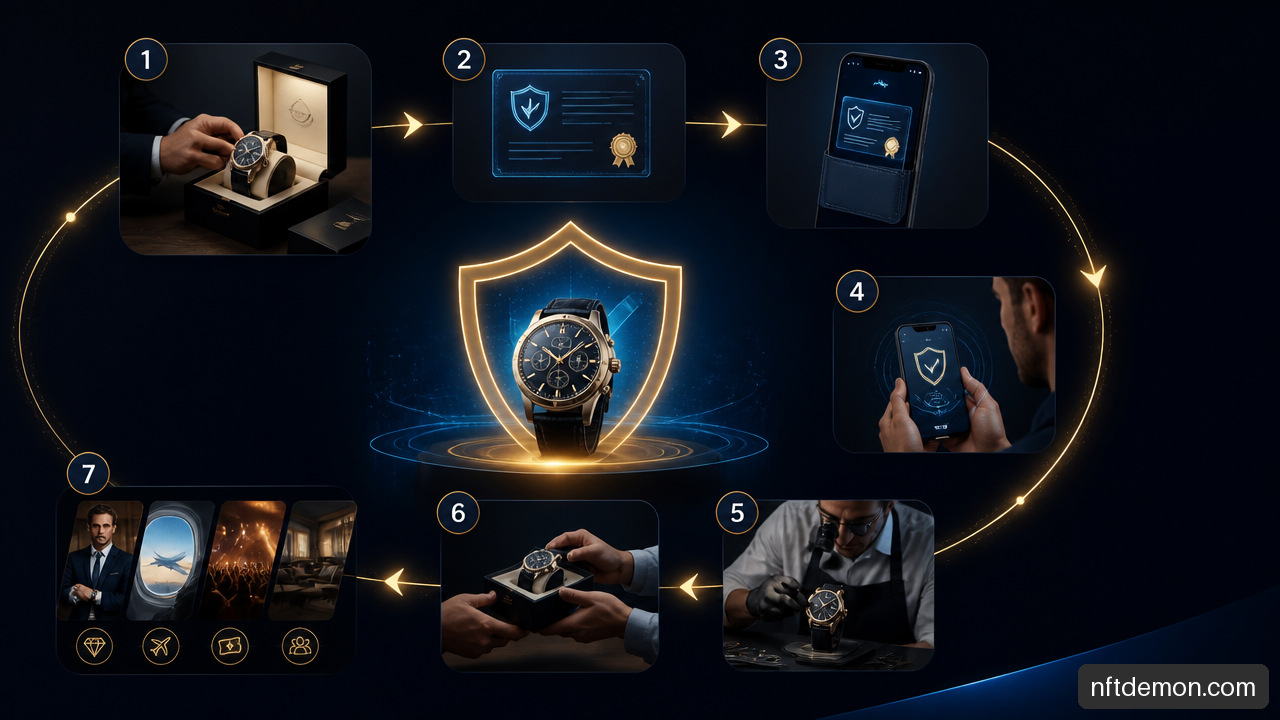
A product passport can support warranty activation, repairs, resale transfer, insurance documentation, authenticity checks, and care content. OMMAX has described a physical-product model in which NFTs connect brands, owners, and third parties to a mobile-first ecosystem with after-sales services and insurance: OMMAX’s example of connected ownership and after-sales services.
For an access pass, design a lifecycle calendar rather than a one-day reveal. It might include quarterly benefits, event access, priority purchase windows, seasonal content, or a renewal decision. Each benefit should be tested against cost, local availability, transfer rules, and customer eligibility.
Measure Whether To Continue, Pivot, Or Sunset
A program should have review thresholds before launch. Sales volume alone is not enough. A free mint may generate impressive wallet counts but little customer value. Conversely, a modest product-passport program may be strategically successful if it improves authentication, service enrollment, or resale participation.
Use a balanced scorecard:
| Metric Area | Useful Measures | What It Reveals |
|---|---|---|
| Adoption | Registration rate, wallet activation, completed onboarding | Whether the experience is understandable and accessible |
| Utility | Benefit redemption, repeat visits, verified product transfers | Whether ownership has practical value after minting |
| Commercial impact | Incremental conversion, repeat purchase, service revenue, retention | Whether the program supports business outcomes |
| Trust and operations | Support contacts, fraud reports, recovery time, dispute rate | Whether friction or risk is damaging the experience |
| Community health | Active holders, event participation, opt-in engagement | Whether the relationship is continuing without artificial hype |
Set a formal review at 30, 90, and 180 days. Continue if utility usage and business indicators justify operating cost. Pivot if customers register but do not redeem benefits, which often signals weak utility or poor communication. Sunset new issuance if support burden, fraud, regulatory exposure, or fulfillment cost outweighs value; existing holder commitments should still be honored or transitioned under published terms.
Key Takeaways
• Start with a customer and product problem. Use NFTs when verifiable ownership, transferability, certification, or token-gated access creates a benefit a normal loyalty system cannot deliver as well.
• Classify the token precisely. Collectibles, access passes, and digital certificates create different legal, tax, customer-support, and lifecycle obligations.
• Localize before scaling. Global programs need jurisdiction-specific review of contracting entity, consumer claims, IP rights, tax, privacy, language, and fulfillment.
• Choose custody intentionally. Embedded wallets can improve onboarding, while self-custody can increase customer control. Each model changes recovery, security, and support responsibilities.
• Fund post-mint utility. A token without a durable job becomes an expensive campaign artifact.
• Measure operational trust alongside revenue. Activation, redemption, fraud, support burden, and repeat engagement reveal whether digital ownership is functioning as infrastructure.
Frequently Asked Questions
What Is NFT Strategy Consulting For Global Brands?
NFT strategy consulting helps a brand decide whether digital ownership fits its commercial objective, then translates that decision into a use case, operating model, technology architecture, governance structure, compliance plan, and measurement framework. It should cover more than creative direction or mint mechanics. The work is most valuable when it connects customer value to rights, security, finance, and long-term delivery.
When Does A Brand Need Digital Ownership Instead Of A Normal Loyalty Campaign?
Choose digital ownership when customers benefit from verifiable, transferable, persistent status or product records. A luxury product passport, authenticated resale record, transferable event credential, or collector asset may qualify. Avoid NFTs when the objective is simply discount distribution, email capture, or short-term engagement; conventional loyalty tools are often clearer and less operationally demanding.
How Do You Tell Whether An NFT Is A Collectible, Access Pass, Or Digital Certificate?
Classify it by the customer promise. If the main promise is cultural or aesthetic ownership, it is a collectible. If the main promise is admission or eligibility, it is an access pass. If the main promise is proof of authenticity, registration, or product history, it is a digital certificate. A hybrid is possible, but every additional promise increases the need for precise terms and reliable fulfillment.
Which Blockchain Or Platform Is Best For A Brand NFT Program?
The best choice depends on audience, transaction cost, wallet experience, environmental requirements, marketplace visibility, geographic availability, security model, and integration needs. Choose a mature ecosystem when interoperability and collector reach matter. Choose a more controlled platform or embedded wallet approach when mainstream onboarding, brand experience, and customer support matter more. Do not select a chain solely because it is fashionable or inexpensive.
How Do Brands Reduce Wallet Friction For Mainstream Consumers?
Offer familiar sign-in methods, support credit-card or local-payment flows where available, explain custody in plain language, and make recovery procedures visible before purchase. The experience should not demand that a first-time customer understand private keys before receiving value. At the same time, do not conceal material limits on transferability, recovery, or account control.
What Legal, Tax, And Security Issues Should Be Reviewed Before Launch?
Review IP ownership and licensing scope, consumer terms, advertising substantiation, privacy, age restrictions, payment rules, local tax and VAT implications, financial reporting, custody arrangements, smart-contract controls, fraud monitoring, and incident response. The exact analysis varies by jurisdiction and token design. A digital certificate connected to a physical product can raise very different issues from a tradable access pass.
How Should A Brand Measure ROI On A Digital Ownership Program?
Measure the business objective the program was intended to serve. For product passports, track registration, authentication usage, service participation, and resale support. For access programs, track redemption, retention, repeat purchase, and cost per active holder. For collectibles, track primary revenue only alongside engagement and support costs. A program should continue because it produces durable value, not because the launch generated attention.
Sources And References
• Harvard Business School — The NFT Staircase: How Digital Ownership Helps Brands and Consumers: https://aiinstitute.hbs.edu/the-nft-staircase-how-digital-ownership-helps-brands-and-consumers/
• CXG — CXG and Trust-Place Join Forces on Digital Ownership: https://www.cxg.com/insight/nfts-and-digital-ownership/
• Harvard Business Review — How Brands Are Incorporating NFTs Into Their Corporate Strategy: https://hbr.org/sponsored/2022/05/how-brands-are-incorporating-nfts-into-their-corporate-strategy
• brandinginasia.com: https://www.brandinginasia.com/budweiser-makes-a-massive-bet-on-nfts-with-signing-as-founding-client-for-vaynernft/
• ommax.com: https://www.ommax.com/en_en/insights/newsroom/ommax-advised-luxury-retailer-bucherer-on-the-successful-acquisition-of-adresta
NFT Demon Holdings helps enterprises scope, evaluate, and build blockchain programs — start with a free evaluation call.
Talk through your use case
Free evaluation call — objective, constraints, and fit, before any proposal.