How to Identify High-Value Blockchain Use Cases for a Consumer Brand
By Jeremy Ryan, Founder & CEO · September 2026
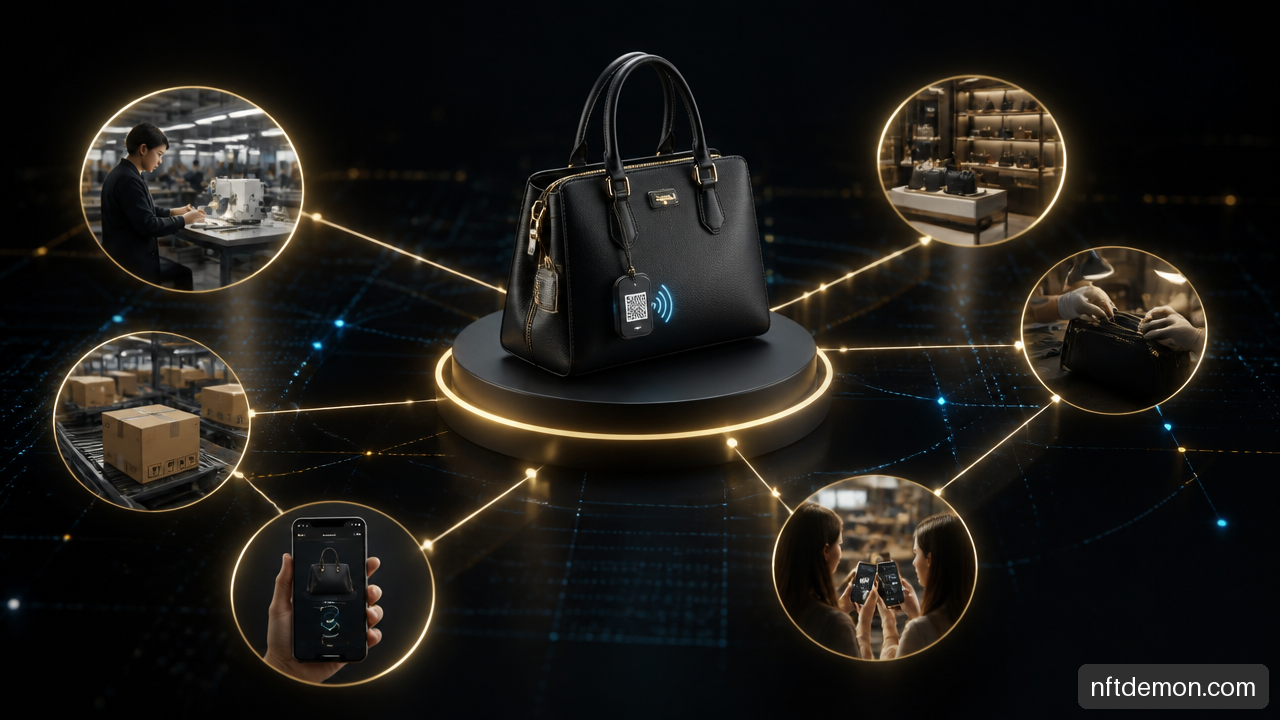
The practical answer to how to identify high-value blockchain use cases for a consumer brand is simple: start with a costly trust, coordination, or verification problem, not with a token, NFT, or blockchain platform. I recommend prioritizing workflows where several parties need a shared record, consumers benefit from proof, and success can be measured in commercial or operational terms.
Blockchain is not automatically a better database. It is a shared system of record that can make certain claims, ownership events, and product histories easier to verify across organizations. For a consumer brand, that distinction matters. A QR code that opens a product story may be useful, but it only becomes a strong blockchain candidate when the brand, supplier, retailer, repair partner, customer, or reseller needs to trust the same underlying evidence.
Key Takeaways
• The strongest use cases solve a trust gap. Counterfeit risk, fragmented product provenance, warranty disputes, resale verification, and targeted recalls usually offer more concrete value than a standalone digital collectible.
• Shared participation is the test. If one company controls the data, a conventional database is often cheaper, faster, and easier to govern.
• Consumer value must be visible. A customer should gain proof of authenticity, easier service, better recall information, portable access, or a meaningful benefit without learning how wallets or smart contracts work.
• Use a scoring model before choosing technology. Rank candidate workflows by customer pain, multi party coordination, auditability, economic impact, adoption feasibility, and regulatory exposure.
• Keep personal data off chain. In most consumer scenarios, blockchain should hold a reference, proof, status, or cryptographic hash while sensitive customer information remains in controlled off chain systems.
• Pilot against one baseline metric. Measure a reduction in counterfeit claims, time to validate a warranty, supplier reconciliation work, recall targeting time, or repeat engagement. If the pilot cannot improve a baseline, it should not scale.
Start With A Business Problem, Not A Blockchain Feature
A high value use case begins with a question that is more specific than “How can we use blockchain?” Ask instead: Where does the brand lose revenue, trust, time, or evidence because multiple parties keep conflicting records?
This framing prevents a common failure mode: building a consumer experience around a technology label instead of a customer need. A token campaign may generate initial attention, for example, but attention alone does not prove that tokenization improves retention, margin, customer service, or trust.
Gartner’s work on blockchain business value supports prioritizing use cases with concrete outcomes rather than broad adoption driven by novelty. That is the right discipline for consumer brands. A project should earn its complexity.
Identify The Trust Gap
Blockchain is most defensible when independent parties need to rely on the same record but have different incentives, systems, or levels of trust. In consumer markets, that often occurs across manufacturing, logistics, retail, resale, repair, warranty, and customer support.
Consider a premium apparel brand with an active resale market. The brand may need to verify whether a garment is authentic, whether it was repaired by an approved service provider, and whether its materials claims are supported by supplier records. A shared product certificate can connect those events. The customer gets more confidence at resale, while the brand gains a more credible ownership and aftercare record.
By contrast, if the brand simply wants to track inventory across its own warehouses, a standard enterprise resource planning system may be sufficient. No external trust gap exists. Adding blockchain would likely create integration work without adding meaningful verification value.
Prioritize Physical Products With Evidence Problems
The most promising consumer brand candidates typically have at least one of these characteristics:
• Counterfeit exposure: Fake products harm revenue, safety, customer trust, and authorized channel partners.
• High resale or ownership value: Luxury goods, collectibles, electronics, jewelry, and limited editions can benefit from verifiable ownership and service history.
• Regulated, ethical, or origin claims: Food, beauty, apparel, jewelry, and wellness brands may need stronger evidence for sourcing, ingredient, origin, or sustainability communications.
• Complex aftercare: Warranties, repairs, product recalls, and service eligibility become harder when records are fragmented.
• Multiple commercial partners: Suppliers, distributors, retailers, marketplaces, and repair networks need a coordinated source of truth.
Itransition’s retail blockchain overview identifies counterfeit prevention and proof of origin tracking as practical retail applications. The reason is operational, not fashionable: product identity and chain of custody become more valuable when the item changes hands across organizations.
Apply The “Do Not Use Blockchain” Filter
I would stop a use case early if it fails any of the following tests.
| Decision Filter | Use Blockchain When | Avoid Blockchain When |
|---|---|---|
| Data ownership | Multiple independent organizations need the same trusted record | One brand owns and controls all relevant data |
| Audit requirement | A durable, tamper evident event history materially reduces disputes | A standard internal audit log meets the need |
| Consumer value | Verification, service, access, or ownership proof is visible to the buyer | The consumer sees only added steps or jargon |
| Data sensitivity | Minimal proof data can be shared safely | The workflow requires personal or confidential information on chain |
| Partner readiness | Key suppliers, retailers, or service partners will contribute data | Critical participants will not change processes |
| Economics | Reduced fraud, disputes, or manual work exceeds operating cost | Savings are vague and depend on speculative engagement |
Fair warning: “immutable” does not make source data true. If a supplier enters inaccurate material information, the blockchain preserves an inaccurate entry very effectively. The real design challenge is controlling who can create records, validating inputs, and defining who is responsible for corrections.
Score Use Cases Before Funding A Pilot
A brand should not compare authenticity, loyalty, provenance, and digital identity as abstract ideas. Score them against the same criteria. This produces a more defensible investment decision and makes it easier to explain why one workflow should be tested first.
Use A Six Factor Scoring Model
Score each candidate from 1 to 5, where 1 is weak and 5 is strong. Multiply the first four factors by two if customer trust and operating efficiency are strategic priorities.
| Factor | What To Ask | High Score Signals |
|---|---|---|
| Customer pain | Does this remove a real source of uncertainty or friction? | Customers regularly question authenticity, origin, ownership, or service status |
| Trust gap | Do several parties need to verify the same events? | Suppliers, retailers, repair partners, and resellers maintain conflicting records |
| Auditability | Does a permanent event record reduce disputes or improve compliance? | Warranty, recall, provenance, or claim verification requires evidence |
| Economic impact | Can the benefit be tied to revenue protection, cost reduction, or retention? | Lower fraud losses, fewer manual checks, faster service, stronger resale economics |
| Adoption feasibility | Will partners and consumers use the workflow? | QR scans fit existing behavior and partners can integrate with manageable effort |
| Risk exposure | Can privacy, consumer protection, and token compliance risks be controlled? | The design avoids transferable value and minimizes personal data |
A use case that scores highly on novelty but poorly on trust gap and economics should not advance. A brand may still choose it for experimentation, but it should be funded as marketing research, not presented as infrastructure with guaranteed strategic return.
Compare The Most Common Candidates
| Use Case | Best Fit | Why It Can Be High Value | Main Constraint |
|---|---|---|---|
| Product authenticity | Luxury, collectibles, beauty, electronics | Gives customers and channel partners a verifiable product identity | Physical to digital linking must resist tag cloning or removal |
| Provenance and claims | Food, apparel, jewelry, wellness | Connects sourcing evidence to consumer facing storytelling | Supplier data quality and participation determine credibility |
| Warranty and aftercare | Appliances, fashion, electronics, premium goods | Reduces service disputes and creates ownership continuity | Requires integration with service systems and retailer records |
| Recall management | Food, cosmetics, consumer goods | Helps identify affected product batches and purchasers more precisely | Data must be timely, accurate, and coordinated across channels |
| Loyalty interoperability | Multi brand partnerships, travel, entertainment | Can coordinate rewards and conditional access across partners | Transferability, tax treatment, and consumer confusion can complicate design |
| Digital collectibles | Entertainment, sports, lifestyle communities | May support membership, access, and ongoing engagement | Often weak if the collectible is disconnected from a durable benefit |
For luxury and premium goods, consumer facing certificates can make provenance tangible. Aura Blockchain Consortium’s customer journey approach illustrates how product certificates can present verifiable origin and lifecycle information in a luxury context. The strategic lesson is not that every product needs a certificate. It is that proof is valuable when purchase confidence, product history, and brand credibility are part of the buying decision.
Treat Loyalty As A Conditional Use Case
Loyalty programs are frequently proposed because smart contracts can automate reward issuance, redemption rules, and eligibility. Yet blockchain loyalty is not always the best first project.
Choose it when the brand needs rewards to work across several independent partners, when access rights are a core benefit, or when a customer needs to carry a credential between experiences. Avoid it when a conventional loyalty platform can already manage points, offers, and customer service with less friction.
For example, a hotel, event operator, and lifestyle retailer might coordinate a membership benefit across their systems. A shared credential could confirm eligibility without requiring each partner to maintain identical customer records. But a single retailer with a straightforward points program may gain little from putting rewards on chain.
Choose The Right Architecture And Consumer Experience
“Use blockchain” is not an architecture decision. Consumer brands need to choose between public networks, permissioned networks, and hybrid systems based on who must verify records, what data is sensitive, and how much consumer access matters.
Match Architecture To The Trust Model
| Architecture | Best For | Strength | Trade Off |
|---|---|---|---|
| Public blockchain | Publicly verifiable certificates, digital collectibles, broad resale ecosystems | Independent verification and open interoperability | Privacy, transaction cost, wallet design, and consumer support need careful handling |
| Permissioned blockchain | Supplier networks, retail coordination, recalls, internal partner governance | Controlled access and clearer participant rules | Less independent public verification and potentially higher partner governance burden |
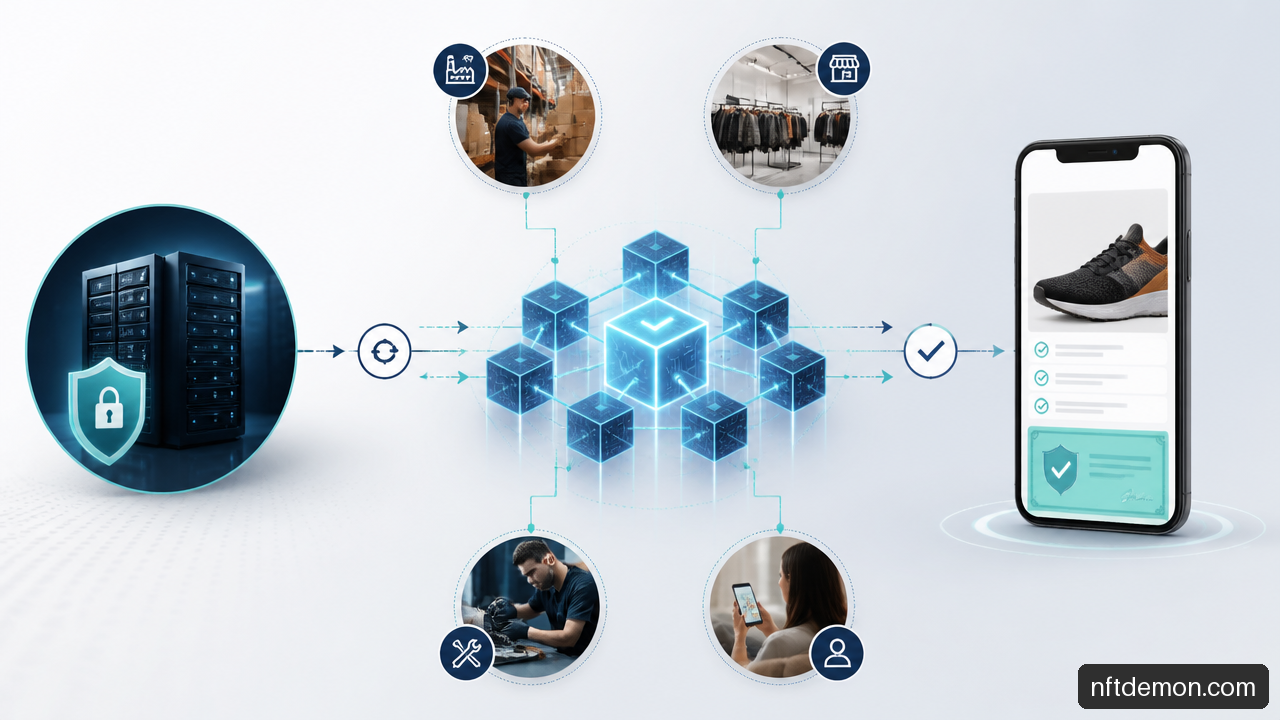
| Hybrid architecture | Most consumer product programs | Keeps sensitive data off chain while publishing verifiable proofs or product events | Requires disciplined integration and clear data governance |
A hybrid design is often the practical default. The brand can store customer identity, invoices, addresses, and detailed service notes in conventional systems. It can then place a product identifier, certificate status, event timestamp, or cryptographic proof on chain. The consumer sees a simple product page after scanning a QR or NFC tag. They should not need to manage a wallet just to register a warranty.
Design For Consumer Comprehension, Not Crypto Literacy
The best consumer experiences hide the plumbing. Customers understand “verify product,” “activate warranty,” “view materials,” and “access member benefit.” They do not need to understand private keys, gas fees, token standards, or decentralized infrastructure.
Use these design rules:
• Let customers use email, passkeys, or a familiar brand account before offering any optional wallet feature.
• Explain the benefit before requesting a scan, registration, or consent.
• Make recovery possible. Lost device access should not erase a warranty or a valid membership right.
• Use plain language for ownership, transfer, expiration, and eligibility rules.
• Build a customer support path for disputed certificates, broken tags, and mistaken product records.
Screen US Compliance And Privacy Early
Consumer blockchain programs can create legal and operational risk when token mechanics are designed before the business rules are clear. A transferable reward with exchangeable value may require more careful securities, money transmission, consumer protection, tax, and anti money laundering analysis than a nontransferable membership credential. Legal counsel should review the design before public launch, especially where a token can be traded, redeemed for cash like value, or promoted as appreciating.
Product claims need the same caution. A blockchain record may help organize evidence, but it does not independently prove that an environmental, origin, or performance claim is truthful. The brand still needs substantiation for what it says to consumers.
For identity, apply data minimization. Keep personal information off chain, use consent based data sharing, and consider verifiable credentials when the goal is to prove a narrow fact such as age, membership, or eligibility rather than disclose a full customer profile.
Run A Pilot That Can Earn A Scaled Rollout
A pilot should test a business hypothesis, not merely demonstrate that a QR code can connect to a ledger. I recommend choosing one product line, one geography, one supplier group, or one customer journey. Limit the scope until the team can see exactly where adoption and value break down.
Define The Baseline Before Building
Pick one primary success metric and a small number of guardrails.
| Pilot Type | Primary Metric | Helpful Guardrails |
|---|---|---|
| Authenticity certificate | Percentage of verification scans that lead to confirmed product registration | Scan completion rate, support contacts, counterfeit reports |
| Provenance program | Time required to produce evidence for a product origin inquiry | Supplier data completeness, exception rate, claim review time |
| Warranty record | Reduction in time to validate warranty eligibility | Registration rate, disputed claims, service agent handling time |
| Recall workflow | Time to identify affected batches and reachable customers | Data completeness, retailer participation, notification delivery rate |
| Loyalty credential | Repeat participation in the intended benefit | Enrollment friction, redemption rate, customer service issues |
There is no universal ROI threshold for consumer brand blockchain projects. The economics depend on product margin, fraud exposure, service costs, and partner integration burden. A useful discipline is to calculate both sides: the annual value of reduced loss or added revenue, and the full cost of tag hardware, platform operations, integration, support, legal review, supplier onboarding, and change management.
Validate The Physical To Digital Link
For authenticity and provenance, the physical link is the weak point. A QR code printed on packaging can be copied. An NFC tag can be removed if it is not tamper evident. A product identifier may be associated with the wrong item if warehouse procedures are loose.
The pilot should test attack and failure scenarios deliberately:
-
Attempt to scan the same identifier across multiple products.
-
Test what happens when a tag is damaged, removed, or duplicated.
-
Verify that supplier and retailer events arrive in the expected order.
-
Run a disputed warranty or resale scenario through customer support.
-
Check whether the consumer understands the result without technical explanation.
If the system cannot handle ordinary exceptions, it is not ready for a broader program. Recovery design is part of the product, not an afterthought.
Set Scale Gates And Stop Conditions
A pilot should have a decision date, a named business owner, and explicit conditions for scaling, redesigning, or stopping. This reduces the risk of an innovation project that continues because money has already been spent.
Scale when the workflow improves the primary metric, partner data is reliable, consumers complete the experience without material friction, and the governance model is clear. Redesign when value appears real but adoption is blocked by tag placement, retailer training, or confusing language. Stop when the trust gap is weak, partners do not participate, or a simpler system achieves the same outcome.
The best blockchain program is often the one consumers barely notice. They notice the proof, the faster service, or the confidence to buy. The ledger is only the mechanism.
Frequently Asked Questions
How Do I Know Whether Blockchain Is Actually Needed For A Consumer Brand?
Use blockchain when independent parties need a shared, auditable record and the customer benefits from verification or portability. Use a normal database when one organization controls the workflow, the data does not require external verification, and a conventional system can resolve disputes adequately.
Is Blockchain Worth It For Product Authenticity Or Anti Counterfeiting?
It can be, particularly for high value goods with counterfeit exposure, resale demand, or warranty complexity. The system is only as strong as the physical identifier, issuance process, and customer support workflow. A copied QR code without tamper resistance is not a complete anti counterfeiting solution.
Which Brand Categories Usually Get The Most Value?
Luxury, jewelry, apparel, food, beauty, electronics, collectibles, and premium consumer goods are often strong candidates because authenticity, origin, safety, aftercare, or resale value affects the purchase decision. Category alone is not enough; a brand still needs a measurable trust or coordination problem.
Should A Brand Use A Public Or Permissioned Blockchain?
Choose a public chain when broad consumer or resale verification matters. Choose a permissioned network when a known set of suppliers and partners needs controlled collaboration. Choose a hybrid model when the brand needs public proof but must keep customer and commercial data private.
What US Regulations Matter For Tokenized Rewards Or Consumer Campaigns?
The risk depends on the design. Transferable tokens, exchangeable value, promotion of investment upside, and cash like redemption can increase regulatory complexity. Nontransferable access credentials may be simpler, but the program still requires review for consumer protection, privacy, advertising, tax, and applicable financial crime considerations.
How Do You Measure Whether A Blockchain Pilot Is Working?
Measure a baseline business problem and compare the pilot against it. Good metrics include time to validate a warranty, verified product registrations, reduction in manual reconciliation, supplier data completeness, faster recall targeting, or repeat use of a membership benefit. Avoid relying on wallet creation or token mint counts as primary proof of value.
Can Blockchain Improve Customer Trust In A Measurable Way?
Potentially, but trust should be measured through behavior rather than assumed. Look for higher product registration, more verification scans, lower authenticity related support contacts, stronger resale conversion, fewer disputed warranty claims, or customer research showing that proof changed purchase confidence. Results will vary by category and how clearly the benefit is communicated.
Sources And References
• Gartner — Top Blockchain Use Cases Delivering Real Business Value: https://www.gartner.com/en/documents/5219363
• Aura Blockchain Consortium — Customer journey: https://auraconsortium.com/customer-journey
• Itransition — Blockchain in Retail: Use Cases and Real-Life Examples: https://www.itransition.com/blockchain/retail
NFT Demon Holdings helps enterprises scope, evaluate, and build blockchain programs — start with a free evaluation call.
Talk through your use case
Free evaluation call — objective, constraints, and fit, before any proposal.