Compliant security token offerings, a practical executive guide
By Jeremy Ryan, Founder & CEO · October 2026
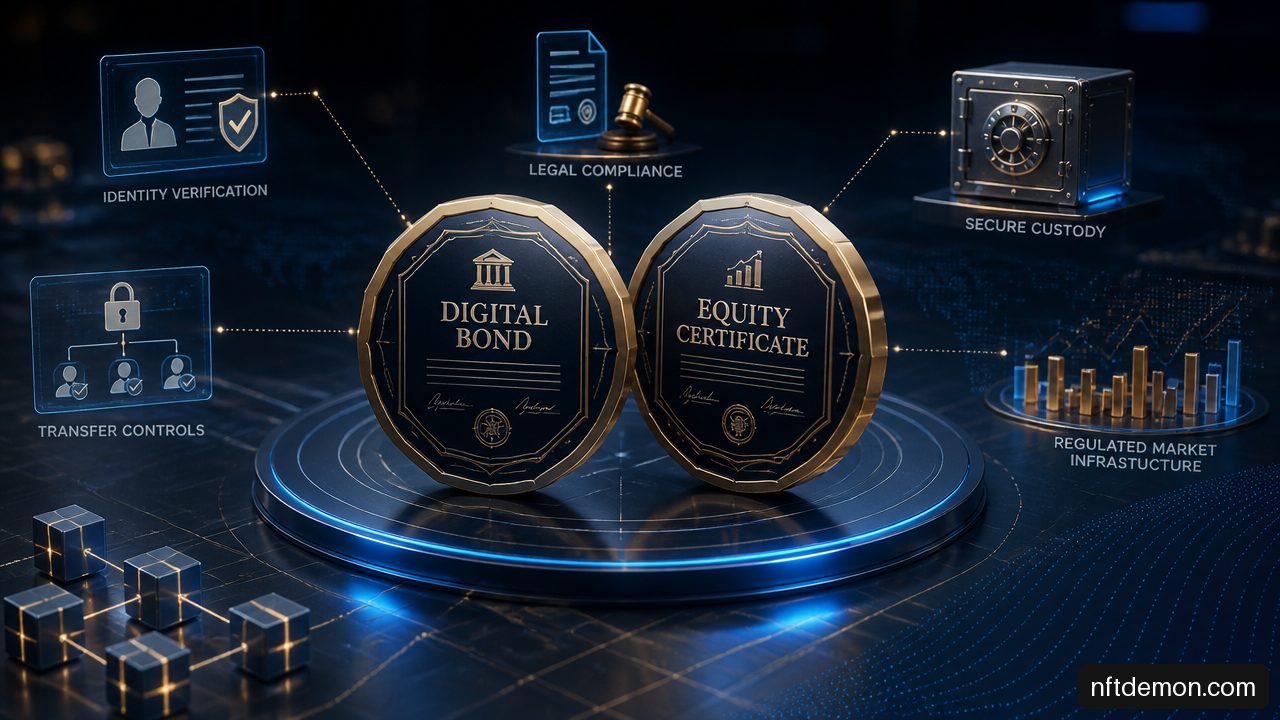
Compliant security token offerings are not simply token launches with legal language attached. They are regulated securities programs in which blockchain records, smart contracts, investor onboarding, custody, disclosures, and secondary trading all need to work together. I would treat the token as the digital representation of a legal financial instrument, not as a substitute for the legal and operational structure behind it.
For decision makers, the central question is straightforward: can the organization support the security throughout its full lifecycle, not merely issue it? A token that cannot reliably enforce transfer restrictions, process redemptions, reconcile ownership records, or support investor communications is not ready for institutional use.
- What Makes A Security Token Offering Compliant
- Building Compliance Across The Token Lifecycle
- Secondary Trading, Custody, And Cross Border Risk
- Key Takeaways
- Frequently Asked Questions
- Sources And References
What Makes A Security Token Offering Compliant
A security token offering, or STO, is an offering of a security whose ownership, transfer record, or related rights are represented wholly or partly through distributed ledger technology. The underlying instrument may represent equity, debt, fund interests, revenue rights, or another financial interest. The technology can change how records are maintained and transactions are processed. It does not erase the legal nature of the instrument.
Start With Legal Substance, Not Token Design
The first compliance decision is whether the proposed token is a security. In the United States, this analysis can involve familiar categories such as stock, notes, investment contracts, and interests in pooled investment vehicles. A token marketed around profit expectations arising primarily from the efforts of an issuer, sponsor, or management team may create investment contract concerns.
I would avoid beginning with a question such as, Which blockchain should we use? Start instead with these questions:
• What legal rights does the holder receive?
• What entity issues the instrument and what assets or business activity support it?
• How will returns, voting rights, redemptions, conversions, or distributions work?
• Who is eligible to buy, hold, and transfer the token?
• Which jurisdictions are involved in the offer, marketing, custody, and trading process?
The U.S. Securities and Exchange Commission has stated that tokenized securities remain securities and require consideration of disclosure obligations. That distinction is basic but consequential. An issuer cannot describe a token as a digital asset and assume that securities rules no longer apply.
A blockchain entry can evidence ownership, but it does not independently define the investor’s legal rights. The governing documents, applicable law, and authoritative ownership records still matter.
Registration Or Exemption Is An Offering Decision
Once the instrument is treated as a security, the issuer must determine the offering pathway. In broad terms, an offer or sale of securities generally requires registration unless an exemption is available. The appropriate route depends on the issuer’s capital objective, investor base, disclosure capacity, jurisdiction, marketing approach, and plans for future transferability.
The SEC has emphasized that the format used to record ownership does not determine whether federal securities laws apply. Recording shares on-chain does not remove registration requirements, exemption conditions, or antifraud obligations.
| Offering Decision | What It Changes | Executive Tradeoff |
|---|---|---|
| Registered offering | Broader public distribution may be possible, subject to applicable requirements | Greater disclosure, reporting, legal, and operational burden |
| Exempt offering | May limit the offer to defined investor categories or restrict solicitation | Faster or narrower capital formation, but reduced flexibility |
| Single jurisdiction approach | Simplifies eligibility and disclosure design | Limits geographic reach and investor access |
| Multi jurisdiction approach | Expands potential investor base | Requires country specific analysis of marketing, custody, and transfer rules |
A compliant STO should therefore be designed backward from its constraints. If the issuer expects only accredited or otherwise eligible investors, the onboarding and transfer logic must enforce that policy. If future liquidity is a stated goal, the issuer must assess eligible trading venues before promising tradability.
STOs Versus ICOs And Conventional Fundraising
The practical difference between a compliant STO and an initial coin offering is not merely that one uses more paperwork. An STO begins by accepting that securities regulation governs the transaction. Investor eligibility, offering disclosures, transfer restrictions, recordkeeping, intermediary roles, and trading arrangements are designed around that reality.
Conventional private placements also involve these obligations. Tokenization may add automated transfer checks, programmable corporate actions, digital wallet delivery, and fractional ownership records. It may also add smart contract vulnerabilities, key management issues, blockchain governance risks, and reconciliation work.
I would describe tokenization as an operational choice, not a compliance shortcut. It can be useful when the issuer has a clear reason to automate parts of securities administration. It is a poor fit when the organization cannot maintain the required legal, investor relations, accounting, and support functions after issuance.
Building Compliance Across The Token Lifecycle
A compliant offering is a lifecycle system. Compliance starts before a token exists and continues through every subscription, transfer, corporate action, redemption, and investor inquiry.
Design The Issuance Workflow Before Deploying Code
The issuance process should connect legal documents, onboarding systems, payment procedures, token minting, investor records, and reporting controls. A typical workflow has several distinct stages:
Define the security terms, issuer obligations, investor rights, and governing documents.
Select the registration or exemption path and establish offering disclosures.
Verify investor identity, eligibility, jurisdiction, and required representations.
Approve subscriptions and confirm receipt of funds through controlled procedures.
Mint or allocate tokens only after the approval conditions are met.
Maintain authoritative ownership records and reconcile them with blockchain data.
Support ongoing communications, distributions, voting, redemption, and transfer requests.
The core operational principle is simple: a wallet address is not an investor profile. One investor may control several wallets. One wallet may be controlled by a custodian, nominee, institution, or multisignature arrangement. The compliance system needs an identity and entitlement model behind the address.
This is where an enterprise blockchain strategy consulting for compliance approach becomes practical. The goal is not to create a larger stack. It is to establish clear decision rights over investor approval, wallet whitelisting, exception handling, record corrections, and audit evidence.
Make Transfer Restrictions Enforceable
Offering documents may prohibit certain transfers, but written restrictions alone do not stop an impermissible wallet-to-wallet transaction. A security-token smart contract can incorporate rules that approve, reject, pause, or flag a transfer based on conditions such as investor status, jurisdiction, lockup periods, sanctions screening outcomes, or wallet authorization.
A Consensys case study describes tokenized financial assets configured so transfers occur only under preapproved legal, KYC, and AML conditions. That example illustrates why security token implementation requires controls beyond token creation, including custody, settlement, and market infrastructure.
Still, hard coded restrictions are not automatically perfect compliance. Consider a fund token that permits transfers only between approved investors. A smart contract may successfully block an unauthorized recipient, but questions remain:
• What happens when an investor changes residence?
• Who updates records after a corporate reorganization or inheritance event?
• Can a qualified custodian move tokens between internal wallets without triggering a false rejection?
• What process applies when a court order, fraud investigation, or lost key requires intervention?
The answer should be documented before issuance. Some structures use an authorized transfer agent or administrator to update eligibility records. Others reserve defined administrative powers in the token contract. Either approach requires governance controls so that emergency powers do not become an opaque ability to alter investor ownership.

Establish A Record Hierarchy And Reconciliation Process
Blockchain records can provide an auditable transaction history, but an issuer should decide which system is legally authoritative when records differ. This is especially important when the token is linked to a transfer agent, cap table provider, custodian, broker dealer, or off-chain subscription system.
A durable blockchain operating model for ownership compliance should specify the following:
| Control Area | Required Decision | Failure If Unclear |
|---|---|---|
| Ownership record | Identify the authoritative register and legal recordkeeper | Competing ownership claims |
| Wallet mapping | Link beneficial owners, nominees, and approved addresses | Incomplete eligibility evidence |
| Reconciliation | Set timing, tolerances, approvals, and exception procedures | On-chain and off-chain records diverge |
| Corporate actions | Define processes for dividends, interest, votes, conversions, and redemptions | Investors receive inaccurate entitlements |
| Incident response | Define key loss, contract pause, fraud, and correction authority | Delayed recovery during a critical event |
This is not administrative trivia. If a token holder receives a dividend, votes in a governance matter, converts debt to equity, or redeems an instrument, the issuer must calculate and execute the correct legal outcome. Smart contracts can automate parts of that work, but the issuer still owns the responsibility for the result.
Secondary Trading, Custody, And Cross Border Risk
Liquidity is often presented as a primary benefit of security tokens. It should be viewed as a conditional outcome. A token can be technically transferable while remaining economically illiquid because eligible buyers are limited, trading venues are unavailable, holding periods apply, or market makers do not participate.
The Trading Venue Is A Separate Compliance Question
An offering can be compliant at issuance and still face a different problem when holders want to trade. In the United States, broker dealer activity, exchange activity, and alternative trading system activity may trigger distinct obligations. The SEC’s regulatory map explains that secondary trading and market intermediary activities can create obligations separate from the initial offering.
That means an issuer should not assume that a token can list on any cryptocurrency exchange. The venue, transaction flow, order handling, custody model, investor eligibility controls, and settlement process must fit the applicable securities framework.
I would ask potential trading partners these questions before referring to liquidity in offering materials:
• Which investor categories can access the venue?
• Does the venue support the token’s transfer restrictions and holding periods?
• Who performs trade surveillance, transaction reporting, and customer onboarding?
• How are failed settlements, erroneous trades, and corporate actions handled?
• Can the venue reconcile wallet movements with the issuer’s authoritative ownership records?
Custody Is Both A Security And An Investor Protection Issue
Custody design determines who controls private keys, how transactions are authorized, and what happens if access is compromised. An institutional investor may need segregation, audit trails, approval policies, and recovery procedures that differ sharply from a retail wallet model.
A custody assessment should address whether assets are self-custodied, held by a third party, controlled through multisignature arrangements, or represented through a nominee. Each choice affects control, recovery options, operational speed, and regulatory analysis.
AML controls also need to extend beyond initial onboarding. An approved investor can later attempt a transfer to an unapproved wallet, and a venue can introduce exposure to additional counterparties. Tools such as AI-powered AML compliance tools for decentralized exchanges may help identify suspicious patterns, but automated screening should support documented review and escalation procedures rather than replace them.
Global Compliance Is Not A Single Status
There is no universal global compliance label for security tokens. An offering available in several countries may face different rules for securities classification, investor solicitation, disclosure, data processing, custody, marketing, exchange access, and resale.
The World Bank’s comparative work notes that STO compliance depends on jurisdiction specific regulatory approaches, investor protections, risks, and market conditions. That is why a general statement that an offering is globally compliant is usually too broad to be useful.
A realistic cross border plan identifies permitted jurisdictions, excluded jurisdictions, marketing channels, investor categories, local service providers, data handling requirements, and transfer limitations. If that analysis is unfinished, restrict distribution rather than allow a broad international launch based on assumptions.
The Neufund case provides a useful caution. A university case study reported that the project raised approximately $19 million from more than 11,000 investors in 123 countries before ceasing operations in June 2020. The lesson is not that tokenization fails. It is that fundraising scale and international participation do not prove that the regulatory, operational, and market model will remain viable.
Key Takeaways
The Executive Standard For A Compliant STO
• Treat the token as a representation of a regulated instrument, not as a separate legal category.
• Select registration or exemption before choosing technical architecture.
• Build investor eligibility, KYC, AML, transfer restrictions, and exception handling into the operating model.
• Maintain an authoritative ownership record and reconcile blockchain data with off-chain systems.
• Analyze secondary trading separately from the initial offering. A compliant issuance does not guarantee compliant trading or liquidity.
• Evaluate custody, wallet control, recovery, and corporate-action processing as investor-protection requirements.
• Limit cross border distribution until each relevant jurisdiction has been assessed.
A mature STO is not defined by how quickly a token is minted. It is defined by whether the issuer can administer investor rights accurately when conditions become complicated.
Frequently Asked Questions
What Is A Compliant Security Token Offering?
A compliant security token offering is a securities offering in which ownership or financial rights are represented through blockchain or distributed ledger technology and the issuer follows the applicable securities, disclosure, investor eligibility, and operational requirements. Compliance must cover issuance and ongoing administration.
Does Putting Shares Or Bonds On A Blockchain Change Securities Law?
No. Blockchain may change recordkeeping, settlement, or transfer processes, but it does not change the legal classification of shares, bonds, or other securities. The applicable regulatory framework depends on the instrument and transaction, not merely the technology used to record ownership.
How Do We Determine Whether A Token Is A Security?
Start with the rights attached to the token and the economic reality of the transaction. Analyze whether it represents equity, debt, a fund interest, an investment contract, or another regulated financial instrument. Legal counsel should assess the relevant jurisdiction before public marketing, minting, or accepting investor funds.
Can A Security Token Trade On Any Crypto Exchange?
No. A venue that supports crypto assets generally may not be structured to support regulated securities transactions. Secondary trading can involve separate requirements for broker dealers, exchanges, alternative trading systems, custody providers, and investor eligibility controls.
Do Smart Contracts Guarantee Compliance?
No. Smart contracts can enforce defined rules, such as wallet whitelists, holding periods, and transfer blocks. They cannot independently resolve inaccurate investor data, legal ambiguity, court orders, key loss, regulatory changes, or governance failures. Human review and documented exception processes remain necessary.
Does Tokenization Guarantee Better Liquidity?
No. Liquidity depends on eligible buyers, regulated venues, market depth, investor demand, transfer restrictions, and the availability of intermediaries. Tokenization can make certain processes more automated, but it does not create an active secondary market by itself.
Can Security Tokens Be Offered Internationally?
Potentially, but each jurisdiction may impose different requirements for offering, marketing, custody, investor eligibility, resale, and data handling. A cross border program should use a jurisdiction-by-jurisdiction distribution plan rather than a broad claim of global compliance.
Sources And References
U.S. Securities and Exchange Commission — A Statement on the Tokenization of Securities
https://www.sec.gov/newsroom/speeches-statements/peirce-statement-tokenized-securities-070925U.S. Securities and Exchange Commission — Statement on Tokenized Securities
https://www.sec.gov/newsroom/speeches-statements/corp-fin-statement-tokenized-securities-012826-statement-tokenized-securitiesU.S. Securities and Exchange Commission — Crypto Task Force Regulatory Map Showing Application of Federal Securities Laws to Tokenized Securities
https://www.sec.gov/files/ctf-written-input-reg-map-chart-showing-application-fed-securities-laws-tokenized-securities-122225.pdfWorld Bank — Security Token Offerings: Regulatory Approaches and Lessons Learned
https://openknowledge.worldbank.org/entities/publication/148be1c1-6271-4883-a85e-e6a72b53f2d9SIFMA — Security Tokens: Current Regulatory and Operational Considerations
https://www.sifma.org/wp-content/uploads/2020/11/Securitytokens-Paper.pdf
NFT Demon Holdings helps enterprises scope, evaluate, and build blockchain programs — start with a free evaluation call.
Talk through your use case
Free evaluation call — objective, constraints, and fit, before any proposal.