Tokenizing art and collectibles without losing the asset
By Jeremy Ryan, Founder & CEO · October 2026
Tokenizing art and collectibles can make valuable assets easier to document, distribute, transfer, and potentially divide into smaller economic interests. But a blockchain token is not the painting, watch, trading card, sculpture, or rare manuscript it references. The hard part is not minting. The hard part is creating enforceable rights, credible custody, and operational controls that remain reliable after the token is sold.
• Tokenizing Art and Collectibles: What the Token Actually Represents
• Building a Structure That Connects Tokens to Physical Assets
• Operating the Asset After Issuance
• Sources
Tokenizing Art and Collectibles: What the Token Actually Represents
Key Takeaways
• A token represents rights, not automatically legal title. It may evidence ownership of a digital asset, a contractual claim, a beneficial interest, a redemption right, or a share in an entity that owns the physical item.
• Physical custody is the central dependency. A ledger can record transfers, but it cannot stop an artwork from being stolen, damaged, moved, or released improperly.
• Fractional ownership is a governance model, not just smaller ticket sizes. Multiple holders need defined voting, sale, expense, inspection, and dispute procedures.
• Provenance requires two evidence trails. One trail concerns the object’s authenticity and condition. The other proves that the custodian controls the object and must honor the token’s rights.
• Secondary-market liquidity should never be assumed. A transferable token can still have few buyers, transfer restrictions, or no viable marketplace.
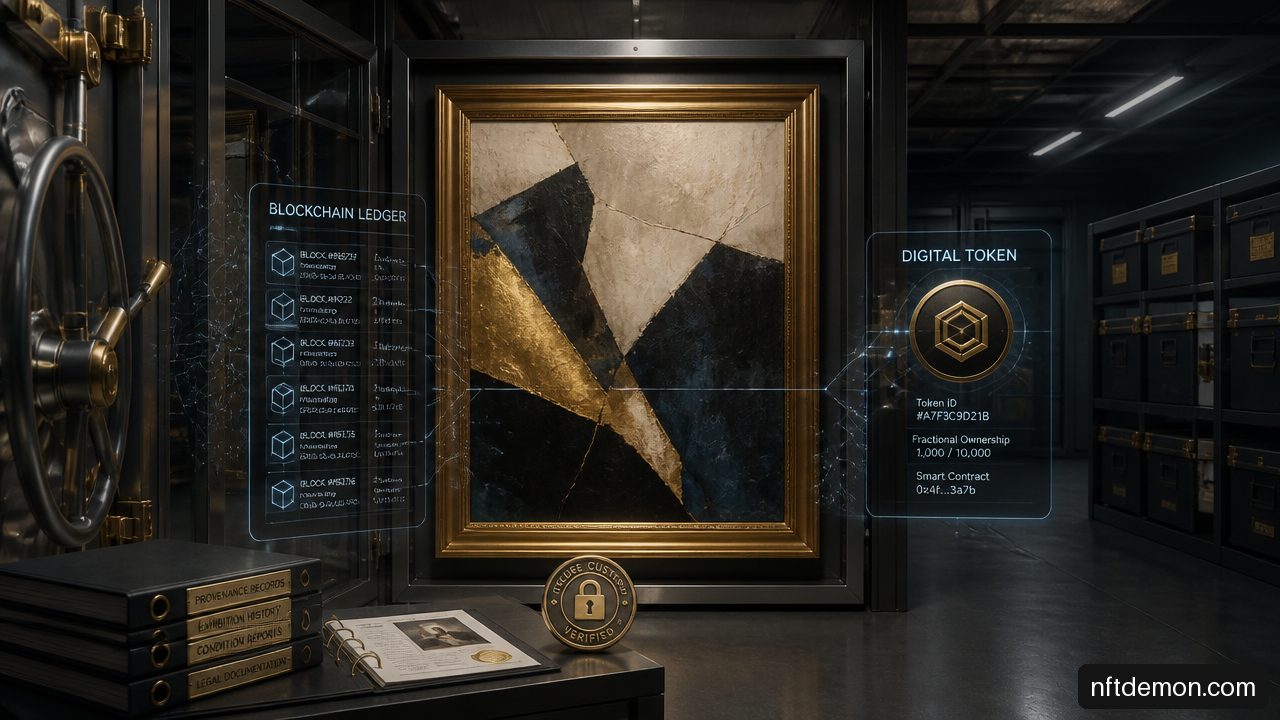
Tokenizing art and collectibles means creating a blockchain-based token linked to rights involving a physical or digital asset. For a digital artwork, that relationship may be comparatively direct: the token can identify the work and the contractual rights attached to it. For a physical collectible, the relationship crosses two systems: an on-chain ledger and an off-chain legal, custodial, and evidentiary framework.
That distinction should shape every executive decision. I would treat tokenization as an asset administration product with blockchain components, not as a minting exercise.
A token can be designed to represent several very different things:
| Token Structure | What the Holder May Receive | Suitable Use Case | Principal Concern |
|---|---|---|---|
| Unique NFT | A defined claim connected to one item | A one of one artwork or collectible | Whether the NFT transfers title, possession, or only a certificate |
| Fractional tokens | A proportional economic or beneficial interest | High-value artwork held for shared ownership | Governance, securities analysis, and sale decisions |
| Tokenized entity interest | Interest in a company or trust that owns the asset | Institutional ownership structures | Entity administration and regulatory obligations |
| Digital certificate token | A record or certificate tied to provenance documents | Authentication and collection management | It may not convey ownership rights at all |
A useful starting question is simple: What can a holder legally demand? If the answer is unclear, the token is likely marketing before it is infrastructure.
Blockchain tokens can represent ownership rights or other claims connected to art and collectibles, as explained in BitGo’s overview of asset tokenization. The word claim matters. A claim may be strong, limited, conditional, or difficult to enforce depending on the contract, governing law, custody arrangement, and identity of the issuing party.
NFTs, Fractional Tokens, and Certificates Are Not Interchangeable
An NFT is generally appropriate when one token corresponds to one distinct work or item. It can include metadata such as the item description, serial number, artist, images, condition report reference, custody location, insurance information, and links to legal documents. The NFT’s uniqueness is useful for identity, but uniqueness alone does not prove the associated object is genuine.
Fungible tokens are better suited to fractional ownership. A collector could own 10 tokens out of 10,000 issued against an artwork held in custody, for example. That design can broaden participation, but it also changes the decision-making model. Who decides when to sell? Who pays storage and insurance costs? Can a majority force a sale? Can a minority block one?
Chainlink’s explanation of tokenized collectibles describes how a unique NFT may represent a specific collectible while fungible tokens can represent fractional interests, including primary issuance and later secondary trading. Those mechanisms are technically possible. Whether they are commercially or legally appropriate depends on the rights being issued.
A digital certificate is different again. It may document a work’s history, authenticity materials, or ownership record without transferring any direct ownership interest. This can be useful for a gallery, artist estate, or brand that wants stronger provenance records but does not intend to fractionalize an object or create a tradable investment product.
Provenance Is Evidence, Not Magic
A blockchain is effective at preserving a history of token creation and transfers. It is not an independent authenticator of a physical painting, signed sports jersey, vintage car, or collectible watch.
For physical assets, provenance should include at least three layers:
Object evidence: artist records, certificates, serial identifiers, expert opinions, high-resolution images, condition reports, restoration history, and chain of title.
Custody evidence: storage agreements, vault receipts, insurance documentation, inspection records, release restrictions, and identity of the legal custodian.
Token evidence: contract address, issuance date, supply, metadata version history, transfer rules, and the legal agreement binding token holders to the arrangement.
The gap between object evidence and token evidence is where many projects become fragile. A beautiful token page can show a digital image of a work, yet reveal little about whether the issuer controls the item, whether the item remains in the same condition, or whether the holder can ever obtain it.
For brands considering collectible programs, NFT strategy consulting for digital ownership should begin with the customer right being delivered rather than the chain or marketplace being selected.
Building a Structure That Connects Tokens to Physical Assets
Start With Authentication, Appraisal, and Rights Mapping
Before issuance, establish the asset’s identity and the issuer’s authority to tokenize it. That means confirming who owns it, whether it is subject to liens or competing claims, whether it can legally be exported or stored in another jurisdiction, and whether copyrights or reproduction rights are included.
An appraisal may help establish a reference value, but it should not be presented as a guaranteed resale price. Art and collectible valuations can vary with condition, market demand, attribution, rarity, and sale venue. If the asset is fractionalized, the offering documents should explain how the issue price was determined and what could cause it to differ from eventual sale proceeds.
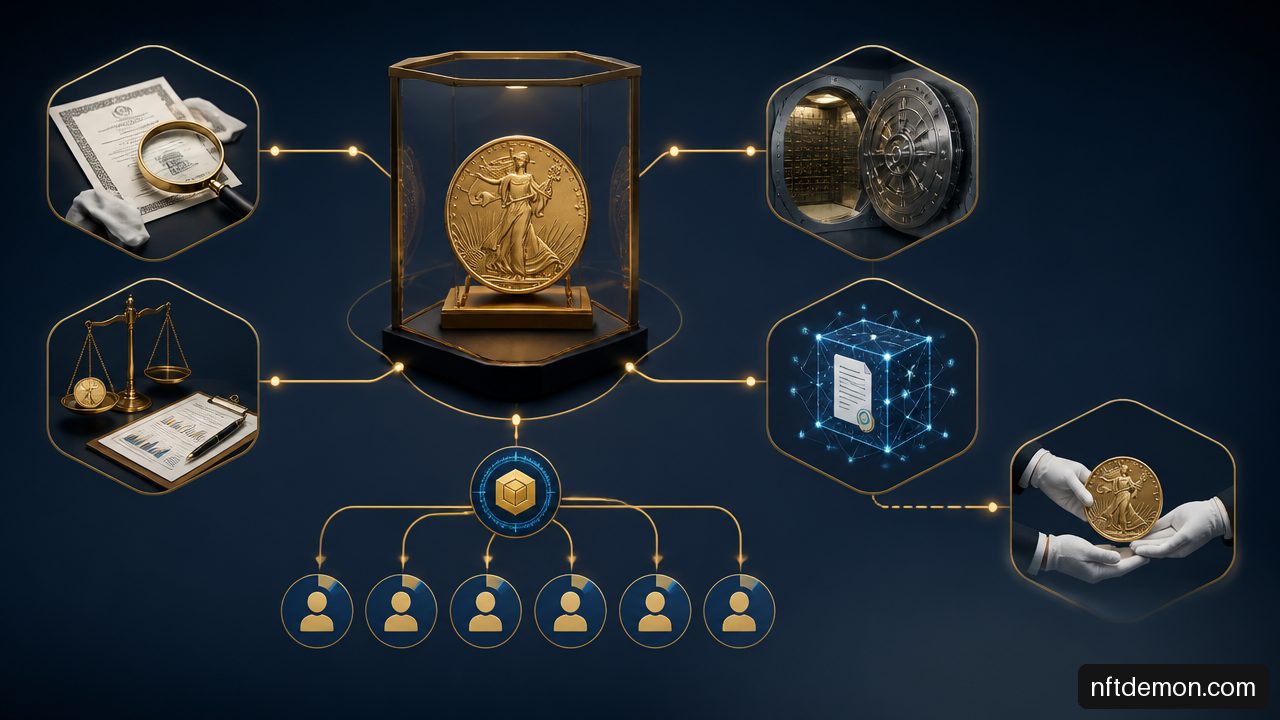
A conventional workflow often includes appraisal, authentication, blockchain issuance, and distribution of interests, as outlined in Zoniqx’s description of art tokenization workflows. For an institutional program, I would add a rights map before issuance. It should state precisely which party owns the object, who possesses it, who has insurance responsibilities, who can authorize transfer, and what token holders can enforce.
Design the Custody and Redemption Model First
The custodian is the operational bridge between a physical collectible and its on-chain representation. This party may be a specialist storage provider, a regulated institution, a gallery, a trustee, or another legally accountable entity. Its role should not be reduced to “holding the item.”
A strong custody agreement should define:
• Asset identification methods, including photographs, serial numbers, seals, or tamper-evident packaging where relevant
• Storage conditions, inventory controls, periodic inspections, and condition reporting
• Insurance scope, exclusions, deductibles, and the beneficiary of claim proceeds
• Restrictions on relocation, lending, sale, or release of the asset
• Procedures if the custodian becomes insolvent, changes ownership, or ceases operations
• Holder inspection rights and the frequency or cost of physical verification
• Redemption procedures, including whether tokens must be burned, consolidated, or transferred to a designated address before release
A critical legal analysis from Springer’s chapter on regulatory compliance for art and collectibles markets notes that blockchain cannot independently enforce the connection between a tokenized claim and a physical artwork. Trusted custody and third-party evidence remain necessary.
Consider a single NFT tied to a rare guitar held in storage. The token may transfer instantly, but the guitar should not leave the vault merely because someone presents a wallet signature. The custodian needs an authenticated release request, confirmation that the token has been surrendered or burned, identity verification where appropriate, and a written handoff record. Without that sequence, the physical asset could be released while the token continues trading.
Prevent Duplicate Issuance and Unauthorized Release
Duplicate issuance is one of the most underappreciated risks in tokenizing art and collectibles. An issuer could create separate “exclusive” tokens tied to the same object on different blockchains, issue a new token after selling the first, or tokenize the asset while it remains subject to another ownership claim.
The practical response is a control system, not a promise. At minimum, use an issuance register that binds the physical item’s unique identity to the token contract, token ID, issuance supply, legal owner, and custody location. Changes should require authorized approval and create an auditable record.
A practical control sequence looks like this:
Authenticate and document the physical item.
Transfer or confirm legal control under the issuing structure.
Place the item with a custodian under release restrictions.
Create a unique issuance record before minting.
Mint only the approved token supply and record the contract address.
Restrict future issuance changes through governance and smart-contract controls.
Require token surrender, burn, or verified consolidation before physical redemption.
The smart contract can enforce supply limits, whitelists, royalty logic, and transfer restrictions. It cannot independently verify that the object in the vault is the one described in the metadata. Human and legal controls still matter.
Planning an NFT project from concept to launch is most useful when planning includes this operating layer: asset evidence, custody controls, holder rights, communications, and recovery procedures.
Operating the Asset After Issuance
Select Technology Based on Administration Needs
The “best” blockchain depends less on brand recognition than on the required token behavior. Decision-makers should assess transaction costs, wallet support, smart-contract capabilities, network resilience, permissions, compliance tooling, marketplace compatibility, and the ability to preserve token records if a specific platform changes direction.
For a public collectible intended for broad wallet access, a public blockchain with mature NFT infrastructure may be appropriate. For a restricted fractional offering, a permissioned transfer model or identity-gated smart contract may be more suitable. If transfers must be limited to verified participants, an unrestricted marketplace is usually a poor fit.
Metadata should also be designed for durability. Store critical legal terms and asset identifiers in a stable, versioned format. Do not rely solely on a marketplace description that can be edited, removed, or become inaccessible. Sensitive records, such as exact storage addresses, insurance policy details, or private owner information, generally should not be placed on a public blockchain.
Fractionalization Requires Governance Before Liquidity
Fractional ownership can lower the minimum participation amount, but it creates a shared-asset governance problem. A holder may want quick liquidity while another wants long-term storage. One may favor exhibition lending, while another objects to transport risk. These are not edge cases. They are predictable consequences of multiple parties holding interests in one physical object.
The governing agreement should answer:
| Decision | Policy to Define Before Issuance | Why It Matters |
|---|---|---|
| Sale of the asset | Voting threshold, valuation process, and buyout rights | Prevents deadlock or unfair forced sales |
| Storage and insurance | Annual budget, reserve policy, and funding source | The asset has recurring real-world costs |
| Inspection | Holder eligibility, notice period, and visit rules | Builds trust without compromising security |
| Damage or loss | Claims process and distribution of insurance proceeds | Determines what holders receive after a casualty |
| Token transfers | Whitelist rules, jurisdiction limits, and lockups | Helps manage compliance and buyer suitability |
| Redemption | Required token concentration and surrender process | Avoids release while fractional claims remain outstanding |
Fair warning: secondary-market trading does not guarantee liquidity. An artwork could be carefully tokenized, fully documented, and still attract few buyers after issuance. This is particularly likely when the asset is obscure, transfer rules are restrictive, or holders cannot easily understand what rights they are purchasing.
Tokenization may be worthwhile without active secondary trading if the objective is provenance management, collector engagement, controlled membership benefits, or more efficient ownership administration. It is less compelling when the only thesis is “the token will create liquidity.” Technology can improve transfer mechanics; it cannot manufacture demand.
Treat Compliance and Recovery as Product Requirements
Fractional interests may raise securities, investment-contract, consumer-protection, tax, anti-money-laundering, sanctions, privacy, and licensing questions. The answer varies by jurisdiction, structure, marketing language, purchaser type, and the rights attached to the token. Legal analysis should occur before public promotion, not after tokens have been distributed.
Cross-border issues deserve special attention because physical art is movable. A collectible may be stored in one country, issued through an entity in another, sold to holders elsewhere, and subject to export restrictions or property-law disputes if it is stolen. The governing-law clause is useful, but it does not eliminate practical enforcement challenges.
A credible recovery plan should cover compromised wallets, smart-contract vulnerabilities, custodian failure, disputed ownership, loss or damage, issuer insolvency, and blockchain or marketplace disruption. Some recovery actions may require a controlled token migration or contractual replacement process. That possibility should be disclosed upfront rather than treated as an emergency improvisation.
For commercial programs, enterprise NFT strategy for consumer brands can help frame tokenization around measurable ownership, engagement, and operational outcomes instead of speculative resale narratives.
Frequently Asked Questions
Does Owning a Token Mean I Legally Own the Physical Artwork?
Not necessarily. Token ownership may convey legal title, beneficial ownership, a contractual redemption right, or only a digital certificate. The answer should be stated in the purchase terms and governing documents. If the documents do not clearly define the holder’s rights, assume the token alone is insufficient proof of title to the physical object.
How Is an Artwork or Collectible Authenticated Before Tokenization?
Authentication generally relies on expert review, artist or manufacturer records, serial numbers, provenance records, condition reports, images, and other evidence appropriate to the category. The token should reference this evidence, but the blockchain record does not independently authenticate the item.
Who Stores and Insures the Physical Asset?
A named custodian, trustee, gallery, vault operator, or other responsible party should store it under a written agreement. Buyers should be able to identify who bears custodial liability, what insurance covers, whether inspections are allowed, and what happens if the asset is damaged or stolen.
What Is the Difference Between an NFT and Fractional Tokens?
An NFT is usually a unique token tied to a particular item or claim. Fractional tokens are interchangeable units representing proportional interests in a shared asset or entity. The latter structure requires governance rules, expense allocation, transfer policies, and a defined process for selling or redeeming the asset.
How Can Token Holders Inspect or Redeem a Physical Collectible?
Inspection and redemption are contractual features. The documentation should specify who may inspect the asset, how requests are made, whether fees apply, and what token action is required before release. For a fractionalized item, redemption may require one party to acquire all outstanding tokens or complete a buyout under the governance rules.
Can Tokenized Collectibles Be Traded on Any NFT Marketplace?
Usually not. A marketplace may not support the blockchain, token standard, transfer restrictions, identity requirements, or legal terms associated with the asset. A token tied to regulated, restricted, or custodied property may need a specialized transfer venue or approved buyer process.
Is Tokenizing Art Worthwhile If There Is No Secondary-Market Liquidity?
It can be, depending on the objective. Tokenization may improve provenance records, membership administration, controlled access, royalty arrangements, or ownership documentation. If the primary goal is rapid resale, limited buyer demand can make the program difficult to justify.
Sources
• Springer — Tokenization and Regulatory Compliance for Art and Collectibles Markets: From Regulators’ Demands for Transparency to Investors’ Demands for Privacy: https://link.springer.com/chapter/10.1007/978-3-030-95108-5_8
• Chainlink — Tokenized Collectibles: A Guide to Digital Ownership: https://chain.link/article/tokenized-collectibles-digital-ownership-guide
• Zoniqx — Art Tokenization: Transforming the Collector and Investor Landscape: https://www.zoniqx.com/resources/art-tokenization-transforming-the-collector-and-investor-landscape
• BitGo — What Is Tokenization of Assets & How Does It Work?: https://www.bitgo.com/resources/blog/what-is-tokenization-of-assets/
NFT Demon Holdings helps enterprises scope, evaluate, and build blockchain programs — start with a free evaluation call.
Talk through your use case
Free evaluation call — objective, constraints, and fit, before any proposal.