Regulatory frameworks for tokenized assets
By Jeremy Ryan, Founder & CEO · October 2026
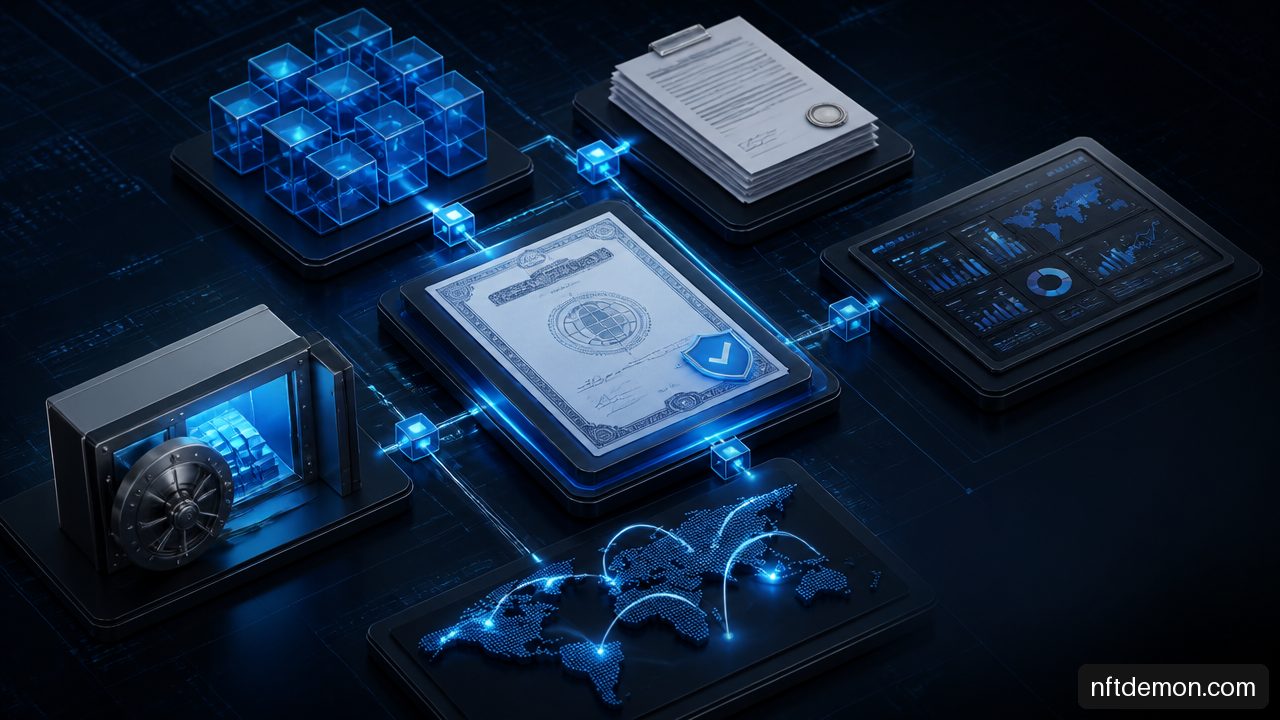
Regulatory frameworks for tokenized assets are not determined by blockchain technology alone. The decisive questions are what legal rights the token represents, who may buy and transfer it, which intermediaries operate the system, and whether the legal record recognizes the on-chain transaction. A tokenized bond may remain a bond. A token representing fund interests may remain a security. A token that tracks deposits, commodities, or real estate can trigger entirely different obligations.
For decision makers, the practical issue is not whether tokenization is regulated. It is which rules apply at every stage: issuance, distribution, transfer, custody, settlement, redemption, and failure or insolvency. That distinction separates a credible institutional product from a technically impressive token with uncertain legal enforceability.
• Classify the Asset Before Designing the Token
• Apply Compliance Across the Full Token Lifecycle
• Compare Major Jurisdictions and Market Structures
• Build Technology Controls That Support Legal Obligations
Classify the Asset Before Designing the Token
The first compliance decision should be made before selecting a chain, writing a smart contract, or planning a distribution campaign. Identify the legal asset, the holder’s enforceable rights, and the regulated activity being performed. Technology changes the recordkeeping and transfer mechanism; it does not automatically change the legal category of the underlying instrument.
Start With Rights, Not Token Labels
A label such as “utility token,” “real world asset token,” or “digital certificate” is not a regulatory classification. I would begin with four questions:
What does the holder receive? This may be equity, debt repayment, profit participation, redemption rights, ownership of an underlying asset, a contractual claim, or access to a service.
Who owes the obligation? The answer could be an operating company, special purpose vehicle, fund, bank, custodian, trustee, or protocol treasury.
How does value arise? Value may depend on issuer performance, pooled management, price appreciation, collateral, interest payments, or a reference asset.
What activity is being offered? Issuance, brokerage, trading, custody, payment services, exchange operation, clearing, and investment management can each carry separate obligations.
The legal structures of tokenised assets must be assessed through the relevant legal categories rather than the technology alone. That is a useful discipline because a single token can combine several legal relationships. For example, a tokenized real estate offering may involve a security issued by a holding company, a property management contract, a custody arrangement for investor assets, and local property law that still recognizes an off-chain land registry as the controlling ownership record.
Separate Four Concepts Often Collapsed Into “Ownership”
A blockchain entry can be meaningful evidence, but it should not be assumed to settle every ownership question. Token structures often involve four separate layers:
| Layer | Core Question | Common Failure Point |
|---|---|---|
| Legal ownership | Who owns the asset under applicable law? | The legal register recognizes a different owner than the wallet holder |
| Beneficial ownership | Who receives economic benefits? | An intermediary holds legal title for underlying customers |
| Ledger record | What does the blockchain show? | The token transfer is valid on-chain but not recognized by the issuer |
| Key control | Who can move the token? | A custodian or compromised signer controls assets belonging economically to someone else |
Consider a tokenized private fund interest held through an omnibus custody wallet. The wallet may hold thousands of tokens. The fund administrator’s records identify each beneficial owner, while the smart contract recognizes the custodian address as the transferor. If a transfer occurs without an administrator update, the chain, the investor register, and the economic entitlement may no longer align.
That is why offering documents, token terms, custody contracts, and corporate records should state which record controls in a conflict, how corrections occur, and who has authority to approve transfers. It is not glamorous work. It is the work that determines whether the token can survive scrutiny, a dispute, or an insolvency event.
Classification Is a Matrix, Not a Single Answer
The same asset can face different treatment based on distribution, investor type, and market infrastructure. A useful classification matrix is below.
| Decision Factor | Why It Changes the Analysis | Example |
|---|---|---|
| Asset and holder rights | Determines whether securities, payments, banking, or property rules may apply | Tokenized notes usually retain debt-like characteristics |
| Investor type | Changes disclosure, suitability, and offering restrictions | A professional-investor offer may differ from a retail offer |
| Distribution method | Affects solicitation and registration analysis | Direct issuer sale differs from exchange distribution |
| Transfer venue | May trigger venue, broker, or market operator obligations | Peer transfer differs from organized secondary trading |
| Custody model | Affects safeguarding and control responsibilities | Self-hosted wallet differs from regulated custody |
| Settlement design | Determines finality, reconciliation, and asset delivery controls | Atomic delivery versus delayed off-chain settlement |
Apply Compliance Across the Full Token Lifecycle
A classification memo is necessary but incomplete. Regulatory obligations attach to operational moments, not only to the token at launch. The OECD notes that tokenized assets raise issues involving investor protection, market integrity, financial stability, competition, and the allocation of regulatory responsibilities among participants. Its discussion of regulatory approaches to tokenisation is particularly relevant because it frames tokenization as a market-structure question, not merely a software question.
Issuance and Distribution
At issuance, the issuer should document the asset, the legal entity behind it, investor rights, risk disclosures, redemption terms, and transfer restrictions. Securities offerings may require registration, an exemption, or a specific offering route. Payment or stable-value arrangements may raise separate reserve, safeguarding, or authorization questions.
The technical controls should mirror those legal promises. If only verified professional investors may hold the token, eligibility cannot sit only in a PDF. The issuance workflow should connect identity verification, sanctions screening, accreditation or suitability evidence where relevant, wallet allowlisting, and a durable audit trail.
A workable evidence architecture normally includes:
• An investor identity record held with appropriate privacy controls
• A wallet-to-investor association with approval status and timestamps
• Eligibility evidence, such as jurisdiction, investor category, or transfer restriction status
• Screening and monitoring records for sanctions and suspicious activity obligations
• A revocation process for expired, compromised, or prohibited wallet addresses
This does not mean placing personal data on-chain. In many designs, the blockchain holds only a permission status or cryptographic reference, while regulated data remains in controlled systems.
Transfers and Secondary Trading
Secondary trading is where many tokenization models move from an issuance project into a regulated market operation. A token that was lawfully issued to a limited investor group can become problematic if unrestricted wallet transfers enable ineligible purchasers, prohibited jurisdictions, or unsupervised public trading.
Transfer restrictions should therefore be evaluated as executable policy. Smart contracts may check allowlists, holding limits, jurisdictional rules, lockups, and forced-transfer authority. Still, code is not a substitute for governance. An allowlist can be incorrectly configured; a verified investor can later become sanctioned; a court order can require a freeze; a smart contract can contain a defect.
Fair warning: “24/7 trading” is not automatically 24/7 legal settlement. Market surveillance, dispute response, price controls, reporting, and customer support must be designed for the hours in which the market is open. The Congressional Research Service notes that U.S. policymakers may decide existing rules are adequate or pursue targeted legislative and regulatory changes for tokenization, including issues associated with on-chain recognition and changing market structures. See its overview of tokenized assets for that distinction.
Custody, Redemption, and Insolvency
Custody is not simply private-key storage. It is a control system covering authorization, segregation, transaction approval, recovery, books and records, and asset return when the custodian fails.
A decision maker should ask whether tokens are held in segregated wallets, omnibus wallets, or a hybrid model. Segregation can improve traceability but may increase operational complexity. Omnibus structures may be efficient but require particularly strong internal ledgers, reconciliation, and client asset protections. Multi-party approval systems can reduce single-key risk, while recovery mechanisms may introduce a new concentration of authority.
Redemption adds another layer. If a token promises redemption for fiat currency, collateral, a security, or a physical asset, the issuer needs procedures for identity verification, valuation, liquidity, payment timing, and disputed requests. In an insolvency, token transfer validity and priority of claim are not necessarily the same issue. A holder may possess a valid token but still need to establish whether the claim ranks against the issuer, an SPV, a trust estate, or a custodian’s client asset pool.
A token is not a complete legal remedy. The enforceable claim sits in the contracts, registers, custody structure, and applicable insolvency law behind it.
Compare Major Jurisdictions and Market Structures
There is no universal tokenization statute that produces the same result everywhere. The most reliable approach is to compare the asset, activity, intermediary, investor, and settlement venue in each target market.
United States: Existing Rules With Targeted Change Options
In the United States, tokenized equities, bonds, fund interests, and investment contracts may remain subject to federal and state securities rules. The SEC may be relevant to offering, broker-dealer, trading venue, investment adviser, transfer-agent, and custody questions, depending on the model. Banking, commodities, money transmission, and consumer protection rules may also matter.
The central issue is often not whether a blockchain can record a transfer. It is whether the transfer is recognized by the issuer and applicable legal regime, whether the offering path is lawful, and whether each intermediary has the required registration or exemption. The U.S. framework can work for carefully structured products, but it may require more legal analysis than teams expect when they begin with a generic token template.
European Union: Financial Instruments and Crypto-Asset Rules
In the European Union, tokenized financial instruments generally fall under established financial-market rules rather than the core scope of MiCA. Depending on structure, MiFID II, the Prospectus Regulation, CSDR, and related national rules may be relevant to issuance, trading, custody, and settlement. MiCA instead addresses defined crypto-assets that do not qualify as financial instruments, including asset-referenced tokens and e-money tokens under specified conditions.
This distinction matters. Calling a token “MiCA compliant” does not establish that a tokenized share or bond meets the rules applicable to securities markets. The OECD identifies three broad policy paths: applying existing financial regulation, creating tailored frameworks, or adapting existing rules for distributed-ledger technology. Its analysis of tokenisation in financial markets explains why regulators must consider how DLT changes issuance, trading, and settlement rather than treating the ledger as legally irrelevant.
Singapore, Hong Kong, and Regulatory Testing Environments
Singapore and Hong Kong are often evaluated for digital-asset market development, but neither should be treated as a blank-check jurisdiction. Licensing, investor protections, anti-money-laundering controls, custody requirements, product restrictions, and marketing rules still depend on the specific activity and target customer.
Regulatory sandboxes can be useful where the legal treatment of a new settlement or issuance process is uncertain. They are most appropriate when a controlled pilot can answer a real supervisory question, such as whether a delivery-versus-payment design protects investors adequately. A sandbox is less useful when the underlying structure is already clearly prohibited or when the project simply lacks basic controls.
For firms operating across multiple markets, enterprise blockchain strategy consulting for compliance should begin with the intended activity in each jurisdiction, not a global deployment assumption.
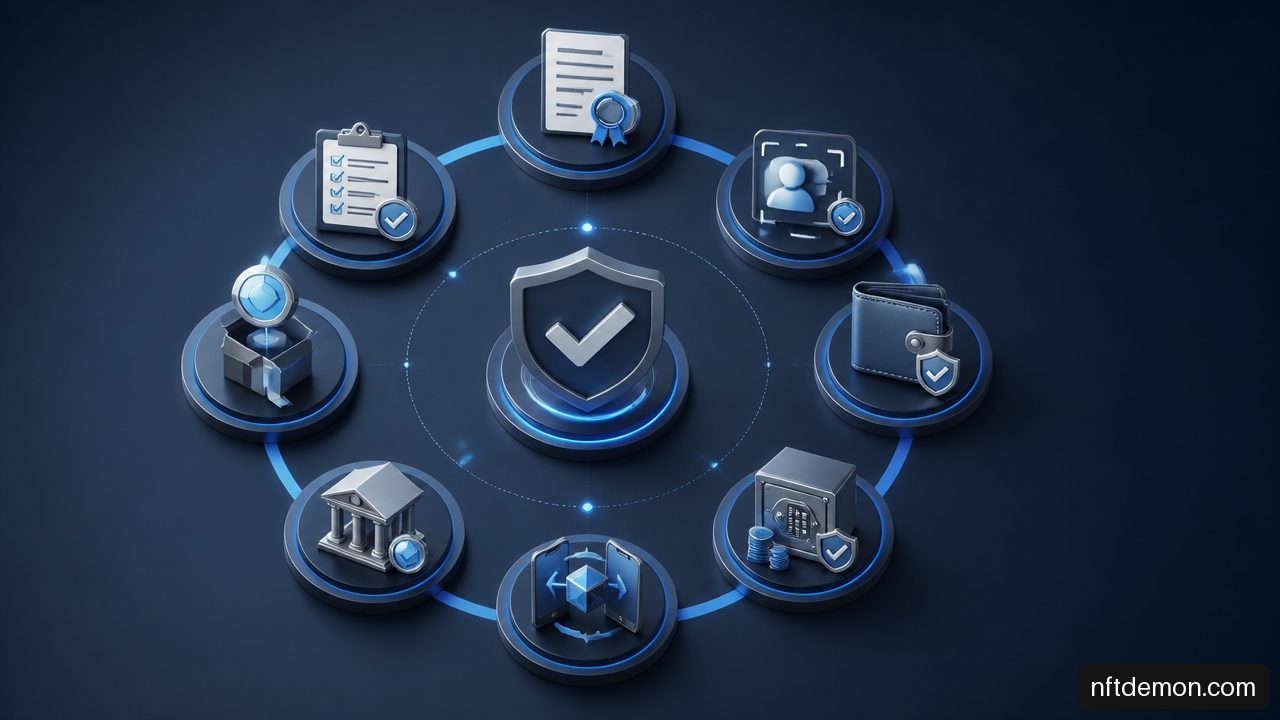
Build Technology Controls That Support Legal Obligations
Permissioned and permissionless networks are design choices, not moral categories. The better option depends on the regulatory obligations, the asset’s risk profile, and the operational model.
Choose Network Design Based on Supervisory Needs
| Design Question | Permissioned Network Tendency | Permissionless Network Tendency |
|---|---|---|
| Validator identity | Known and contractually accountable | Broadly distributed and potentially unknown |
| Access controls | Easier to restrict participants | Requires application-layer controls or token restrictions |
| Privacy | Can support restricted data visibility | Public transaction history may require careful privacy design |
| Governance changes | Formal operator governance can be defined | Governance may be dispersed and harder to direct |
| Resilience and interoperability | May be more controlled but less open | May offer broader interoperability with external systems |
A permissioned network can make identity, privacy, and controlled participation easier to administer. It may also create concentration risk if a small group can halt, alter, or reverse transactions. A permissionless network can support broader interoperability and public verifiability, but sanctions controls, wallet screening, privacy, and response authority can become harder.
Neither model removes the need for legal agreements. If a consortium operates the network, the members should define validator obligations, software-update authority, incident response, audit access, data rights, and liability allocation. For that operating layer, blockchain governance frameworks for consortiums can help translate shared technical control into accountable decision rights.
Define Settlement Finality and Error Recovery Before Launch
Settlement finality is the point at which a transfer becomes legally irrevocable and enforceable. On-chain confirmation is a technical event. Legal finality may depend on the governing contracts, securities law, payment rules, and the status of the settlement system.
The hard cases should be specified in advance:
• A token is sent to the wrong approved wallet
• A private key is lost or compromised
• A smart contract bug creates an unauthorized transfer
• A court order requires a freeze or reversal
• A blockchain fork produces competing transaction histories
• An oracle supplies an incorrect valuation used for redemption or collateral
A sensible recovery framework may include emergency pause authority, defined approval thresholds, a dispute process, an auditable correction procedure, and clear limits on administrator intervention. The trade-off is direct: broad reversal powers can protect users after fraud but weaken confidence that settlement is final. Narrow powers strengthen finality but can leave fewer remedies for operational errors.
Technology architecture should make this trade-off visible to legal, risk, and business stakeholders. The principles in enterprise blockchain architecture in regulated industries are especially relevant where identity, data controls, system integration, and supervisory access cannot be added after launch.
Treat Composability as a Controlled Exposure
A token may be technically capable of being pledged in decentralized finance, wrapped into another token, or used as collateral in automated lending. That capability can create exposures outside the issuer’s intended market. If a protocol liquidation or oracle failure affects token holders, contracts may not clearly allocate responsibility.
For regulated assets, it is often prudent to decide explicitly whether composability is permitted, restricted, or prohibited. Where it is permitted, assess wallet controls, smart-contract interactions, collateral treatment, automated liquidation triggers, and monitoring. Where it is prohibited, do not rely only on public statements; enforce the restriction through token logic and contractual terms where feasible.
Key Takeaways
What Decision Makers Should Prioritize
• Classify the legal right first. A tokenized asset usually inherits obligations from the underlying asset and activity.
• Map the full lifecycle. Issuance compliance does not solve secondary trading, custody, redemption, settlement, or insolvency risks.
• Align legal and technical records. Define the controlling register, wallet authority, correction process, and treatment of conflicting records.
• Make transfer policy enforceable. Investor eligibility, sanctions controls, lockups, and jurisdictional restrictions need operational evidence and technical controls.
• Design recovery deliberately. Finality, fraud response, lost keys, and administrator powers must be decided before the first transfer.
• Treat global expansion as a structured comparison. The same token can require different permissions, disclosures, and infrastructure across markets.
The Practical Standard
Responsible tokenization growth requires legal and regulatory clarity across global regimes, as emphasized in the CFA Institute’s investment perspective on tokenization. The practical standard is simpler than the legal analysis behind it: every promised right should have an identifiable obligor, an enforceable record, an operating control, and a recovery path when something goes wrong.
Frequently Asked Questions
What Is A Regulatory Framework For Tokenized Assets?
It is the combination of laws, regulatory guidance, licenses, contractual terms, operational controls, and supervisory expectations that apply to issuing, holding, transferring, trading, settling, and redeeming tokenized assets. The framework depends on the asset and activity, not merely on the use of blockchain.
Does Tokenization Change The Legal Nature Of The Underlying Asset?
Usually, no. Tokenization may change how rights are recorded, transferred, and settled, but a tokenized bond commonly remains debt and tokenized shares commonly remain equity. Legal recognition of the ledger entry can still require specific documentation or infrastructure.
Is A Tokenized Bond Regulated Like An Ordinary Bond?
Often, yes. The bond’s issuer obligations, investor disclosures, offering restrictions, trading rules, and custody arrangements may still apply. Tokenization can introduce additional questions about transfer validity, settlement finality, wallet control, and market infrastructure.
Does MiCA Apply To Tokenized Securities In The European Union?
Not generally when the token qualifies as a financial instrument. Tokenized securities are more likely to fall under established EU financial-market rules, including frameworks relevant to investment services and securities settlement. MiCA is more directly relevant to crypto-assets that do not qualify as financial instruments.
Which Licenses May Be Needed To Issue Or Trade Tokenized Assets?
This depends on the jurisdiction and role. Potential requirements can involve securities issuance, brokerage, trading venue operation, custody, payment services, investment management, transfer agency, or anti-money-laundering registration. A business should assess each entity and activity rather than assuming one license covers the entire model.
How Do AML And KYC Rules Work With Self-Hosted Wallets?
A self-hosted wallet does not automatically eliminate compliance obligations. Firms may need risk-based processes to identify customers, screen counterparties, associate approved wallets with verified users, monitor transactions, and respond to sanctions or suspicious activity concerns. The exact expectations vary by jurisdiction and service model.
Can Tokenized Assets Be Offered To Retail Investors?
Potentially, but retail distribution usually increases requirements for disclosures, suitability or appropriateness, marketing controls, product governance, custody safeguards, and complaint handling. Some structures may be limited to professional, accredited, or otherwise eligible investors instead.
What Happens If An On-Chain Transfer Conflicts With An Off-Chain Register?
The answer depends on the governing documents and applicable law. A well-designed structure states which record controls, who may correct discrepancies, and how disputes are resolved. Without that hierarchy, a valid blockchain transaction may not necessarily establish legal ownership or enforceable economic rights.
Sources And References
Verified Sources
• OECD — Regulatory Approaches to the Tokenisation of Assets: https://www.oecd.org/en/publications/regulatory-approaches-to-the-tokenisation-of-assets_aea35466-en.html
• OECD — Understanding the Tokenisation of Assets in Financial Markets: https://www.oecd.org/content/dam/oecd/en/publications/reports/2021/11/understanding-the-tokenisation-of-assets-in-financial-markets_2e657111/c033401a-en.pdf
• Congressional Research Service — Tokenized Assets: https://www.congress.gov/crs-product/IF12670
• CFA Institute Research and Policy Center — An Investment Perspective on Tokenization Part II: https://rpc.cfainstitute.org/research/reports/2025/investment-perspective-tokenization-part-ii
• Cambridge University Press — Legal Structures of Tokenised Assets: https://www.cambridge.org/core/journals/european-journal-of-risk-regulation/article/legal-structures-of-tokenised-assets/5D3537D89F9AD858339424E1D60D7C43
NFT Demon Holdings helps enterprises scope, evaluate, and build blockchain programs — start with a free evaluation call.
Talk through your use case
Free evaluation call — objective, constraints, and fit, before any proposal.