How celebrities can build sustainable digital asset programs
By Jeremy Ryan, Founder & CEO · November 2026
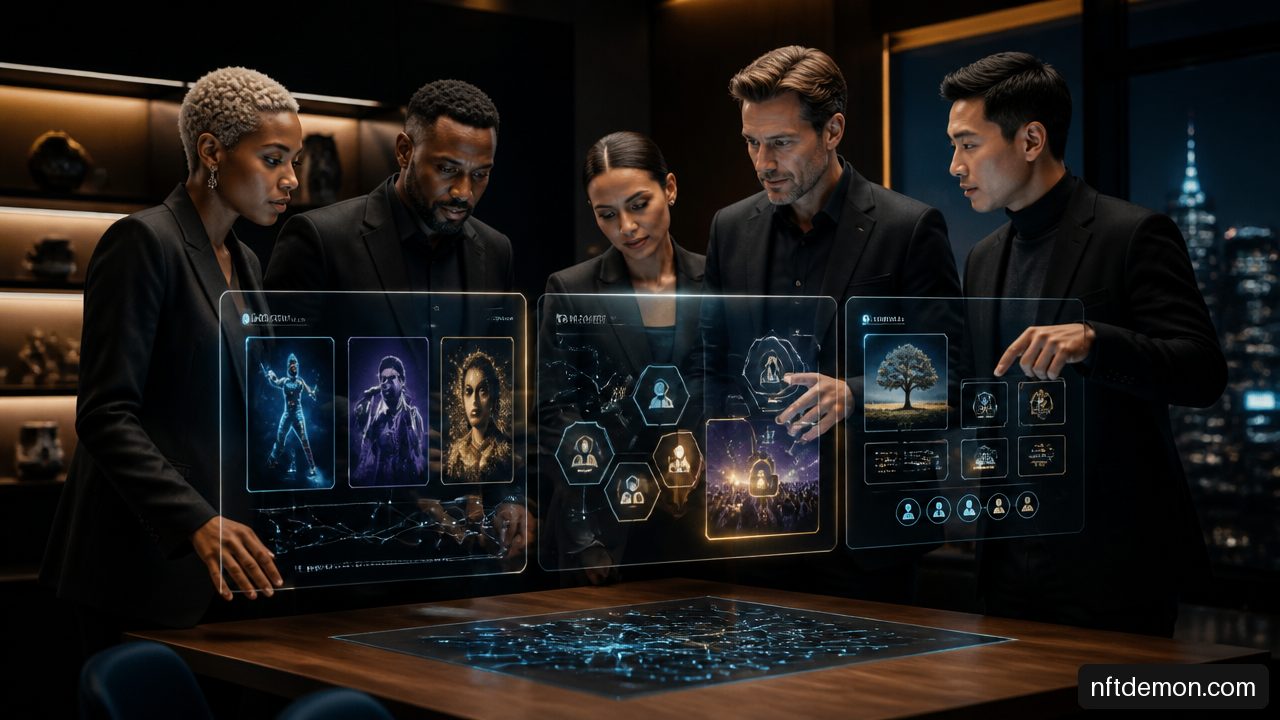
Celebrity digital assets only become durable businesses when they serve fans after the launch moment has passed. For decision makers considering how celebrities can create a sustainable digital asset program, the practical answer is simple: treat it as an ongoing product and service operation, not a one time NFT drop. The technology matters, but rights, benefit delivery, trust, support, and continuity determine whether fans stay involved.
A digital asset program can include NFTs, token gated memberships, digital collectibles, authenticated media, access credentials, or limited digital experiences. The strongest programs do not ask fans to speculate on resale value. They give supporters a reason to participate repeatedly, while setting honest expectations about ownership, access, and risk.
- Build A Program Around Fan Value, Not Speculation
- Design The Rights, Technology, And Revenue Model
- Operate For Trust, Retention, And Long Term Continuity
- Key Takeaways
- FAQ
- Sources And References
Build A Program Around Fan Value, Not Speculation
Define The Program Before Selecting The Token
I recommend beginning with the audience relationship, not a blockchain selection or marketplace pitch. A celebrity may have millions of followers, but follower count is not validated demand. A strong program identifies a specific audience segment, the recurring value it will receive, and the operational capacity required to deliver that value.
For example, an artist could issue a limited digital membership credential that provides early access to ticket sales, an annual private livestream, behind the scenes content, and priority consideration for occasional in person experiences. In that model, the token is the access record. The real product is the member experience.
A collectible model may still fit when the goal is cultural expression, archival provenance, or a limited visual release. It becomes less suitable when a program depends on buyers believing the asset will appreciate. Community discussions about celebrity associated NFT purchases have reported severe price declines and disputed whether participation represented actual ownership, sponsorship, or paid promotion. Those claims need independent verification, but the discussion itself shows why programs should clearly distinguish ownership from advertising: community reports on celebrity NFT price declines and promotional ambiguity.
Use the following decision framework before approving a concept:
| Program Goal | Best Starting Asset Model | When To Avoid It |
|---|---|---|
| Recurring fan engagement | Non transferable or controlled membership credential | When benefits cannot be delivered consistently |
| Limited cultural release | Digital collectible with defined ownership terms | When marketing centers on resale value |
| Premium access | Token gated event or content pass | When identity verification or ticketing workflows are weak |
| Brand partnership | Co branded collectible or access pass | When approvals, trademarks, or revenue splits are unclear |
| Philanthropic initiative | Transparent contribution receipt or participation credential | When charitable claims cannot be documented clearly |
The key question is not, “Can this be tokenized?” It is, “What gets better for the fan because this exists?” If the answer is vague, the program is not ready.
Start With A Staged Program Lifecycle
A sustainable digital asset program needs a lifecycle with distinct gates. I would not approve a broad public launch until the team has completed a controlled pilot and demonstrated that fans understand the offer.
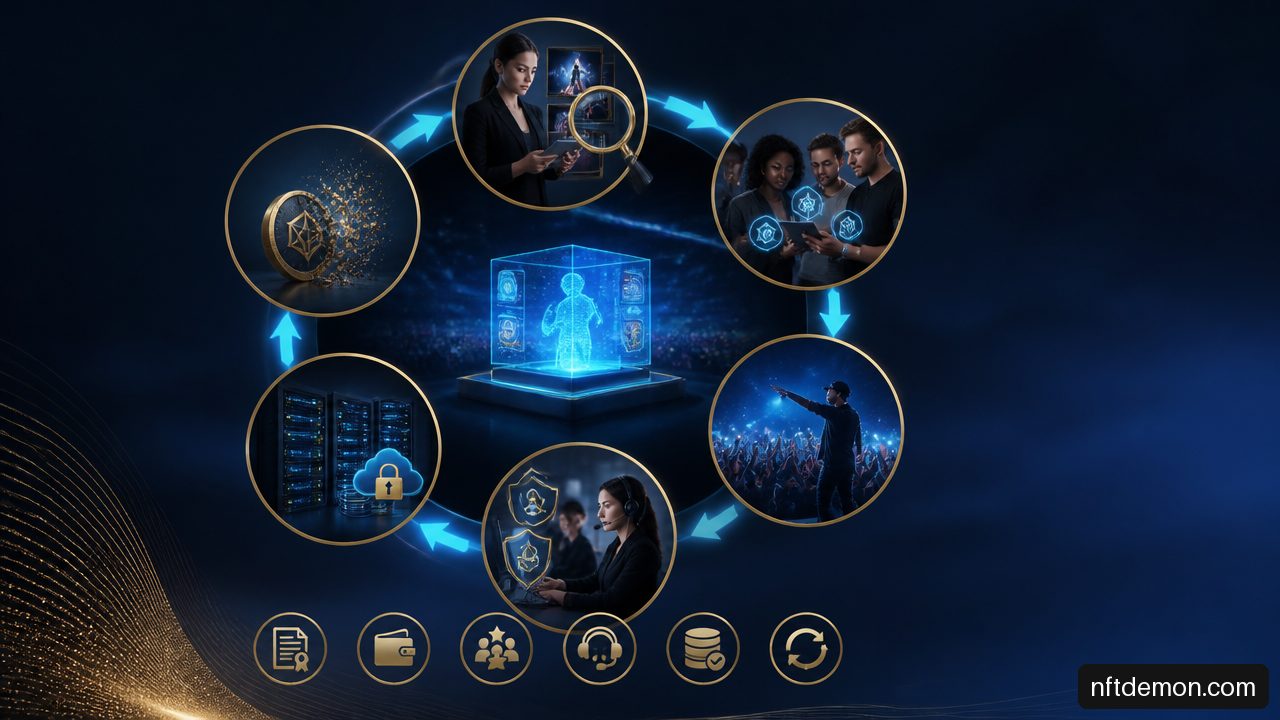
- Discovery: Define the target audience, intended benefits, rights, pricing, compliance considerations, and resource owners.
- Pilot: Offer a small cohort a limited credential or collectible and test onboarding, redemption, support, and communication.
- Launch: Expand only after the team resolves friction found in the pilot.
- Maintenance: Deliver benefits, update content, monitor abuse, and respond to member questions.
- Migration: Preserve access if a vendor, marketplace, wallet tool, or hosting service changes.
- Sunset: Wind down responsibly if the program ends, including rights, records, and holder communications.
This sequence prevents a common failure mode: investing heavily in art, promotion, and influencer activity before proving qualified demand. In one first person Reddit account, a project creator reported low interest despite spending on advertising and influencer marketing, illustrating why teams should validate meaningful participation before scaling acquisition spending: a creator account of low NFT demand despite promotional spending.
A pilot does not need to be glamorous. It needs to be informative. Invite a small group of existing superfans, test wallet creation or email based access, offer one meaningful benefit, and measure whether participants redeem it without substantial support. If redemption is weak, more marketing will not solve the core issue.
Choose Transferability Deliberately
Transferability is a product decision, not an automatic feature. Tradable assets can support collecting, gifting, and secondary market participation. They can also invite speculation, scalping, impersonation, and disappointment when buyers confuse access with investment potential.
A controlled credential often works better for fan clubs, ticket priority, or personal experiences. It may be non transferable, transfer restricted, or bound to verified identity. A tradable collectible can exist alongside it, separating cultural collecting from scarce benefits.
The safest promise is usually the most useful one: define the benefit, define the eligibility rules, and avoid implying that ownership will produce financial returns.
For broader planning, NFT strategy consulting for global brands can help leadership teams frame digital ownership around commercial objectives instead of launch hype.
Design The Rights, Technology, And Revenue Model
Build A Rights Matrix Before Creative Production
Every asset should have a written rights matrix. This is the document that separates token ownership from rights in the work associated with that token. It should be approved before creative assets are minted, promoted, or licensed to a partner.
The U.S. Copyright Office has emphasized that NFTs do not automatically resolve the copyright and trademark rights implicated in creating, marketing, and transferring associated works: the Copyright Office’s NFT study on rights and licensing distinctions. The USPTO and Copyright Office similarly concluded that an NFT does not eliminate the need to clarify permissions related to the underlying content: the joint USPTO and Copyright Office findings on NFT permissions.
A usable matrix should cover at least these categories:
| Rights Category | Approval Question | Example Risk |
|---|---|---|
| Copyright | Who owns the artwork, photograph, recording, or video? | A photographer licensed an image for a campaign but not tokenization |
| Trademark | Can the celebrity name, logo, and collection mark appear on chain and in listings? | A partner uses a mark beyond the approved territory or term |
| Publicity Rights | Is the celebrity’s likeness approved for each use? | A former collaborator promotes an unauthorized derivative collection |
| Music Rights | Are composition, master, performer, and synchronization rights cleared? | A collectible includes a song excerpt without all required permissions |
| Commercial Use | What may the holder do with the asset? | Buyers assume they can sell merchandise using the image |
| Benefit Rights | Who must deliver access, and for how long? | A promoter changes an event policy after assets have been sold |
The purchase page should summarize these terms in plain English. “You own this token” is not enough. State whether the buyer receives personal display rights, commercial rights, access privileges, revocable benefits, or no license beyond personal enjoyment. Fans should not need a lawyer to understand the core transaction.
Select Infrastructure For Continuity, Not Fashion
Technology choices should follow the service model. Blockchain, wallet, smart contract, metadata hosting, marketplace, identity provider, and customer support system all become dependencies. The question is not whether each tool works on launch day. The question is whether the program can preserve access if one of them changes or disappears.
For a long term program, I would require an independent technical and commercial review before launch. The review should test smart contract permissions, administrator controls, metadata storage, vendor dependencies, wallet recovery, security procedures, fee exposure, and customer support handoffs.
Consider a simple edge case. A fan buys an access pass, changes phones, loses the wallet credentials, and contacts support before a tour presale. If the program has no recovery policy, the team may face a choice between denying a legitimate fan or creating an insecure manual exception. Neither outcome builds trust. A recovery process should define what evidence is acceptable, who approves exceptions, and how replacement credentials are issued without enabling fraud.
The Congressional Research Service notes that NFT marketplaces may maintain notice and takedown procedures for alleged copyright infringement: the Congressional Research Service overview of marketplace copyright procedures. That can be useful, but it is not a substitute for monitoring counterfeit listings, impersonation accounts, and stolen artwork across channels.
Make Revenue Fit The Promise
Primary sales, subscriptions, access fees, sponsorships, licensing, and service fees can all support a program. Secondary sale royalties may be possible in some structures, but they should never be modeled as guaranteed revenue because marketplace support and contract behavior can vary.
A sustainable budget treats support, benefit fulfillment, security monitoring, hosting, legal review, and community operations as core costs. If every dollar is spent on launch art and paid promotion, the program may look impressive for a week and then fail its holders.
For executive teams, Enterprise NFT strategy with measurable outcomes offers a useful framework for connecting program design to measurable commercial and audience outcomes.
Operate For Trust, Retention, And Long Term Continuity
Measure Behavior, Not Applause
A sustainable digital asset program should report operational metrics that show whether participants receive value. Social impressions and wallet counts may be useful context, but they do not prove a healthy program.
Track a small set of sustainability KPIs:
• Active holder rate: The share of holders who use a benefit within a defined period.
• Repeat participation: How often members return for releases, content, events, or voting.
• Benefit redemption rate: Whether promised utility is actually claimed.
• Support response time: How quickly the team resolves access, wallet, and fraud concerns.
• Renewal or retention rate: Whether members continue after the first cycle.
• Cost per retained participant: The operating cost required to keep an engaged member, not merely acquire a wallet.
• Fraud and impersonation volume: The number and type of fake accounts, counterfeit assets, phishing reports, and resolved cases.
There is no reliable universal benchmark for these metrics in celebrity programs. That uncertainty is exactly why each program should establish a baseline during its pilot. A small program with 500 holders and high benefit redemption may be more durable than a program with 50,000 minted assets that rarely interact with the celebrity brand again.
Create Disclosure And Communication Controls
Fans may read a celebrity endorsement as a personal investment signal, even when a post is paid promotion or a contractual campaign obligation. Every public communication should distinguish among paid promotion, gifted assets, sponsorship, equity ownership, token allocation, and personal opinion.
Build an approval workflow for social posts, interviews, press releases, affiliate activity, and partner campaigns. The workflow should require plain language disclosures, prohibit price predictions, and verify that benefits match the published terms. The goal is not to drain personality from promotion. It is to avoid ambiguity that can damage a long standing fan relationship.
A useful communications rule is this: describe what the buyer receives today, not what the asset might be worth later. Say “members receive presale access under the published terms,” not “this could be the next major collectible.”
Plan The Sunset Before The Launch
Programs end, platforms change, and careers evolve. A sunset plan is not pessimism. It is part of responsible product design.
The plan should specify the following:
- How long benefits will remain available and what happens when that period ends.
- Where metadata and associated media will be hosted, backed up, and documented.
- How holders will receive notice of material changes.
- Whether users can migrate to a replacement contract, platform, or credential.
- What customer support remains available after public sales stop.
- Which rights survive after the celebrity, partner, or vendor relationship ends.
For example, if a platform closes, holders may still retain tokens on a blockchain but lose the interface that displayed media or verified benefits. A continuity plan can preserve metadata, publish verification instructions, and offer a defined migration window. Without it, “permanent ownership” may prove far less useful in practice.
Before public release, teams can use How to plan an NFT project from concept to launch to pressure test the sequence from concept approval through marketplace readiness.
Key Takeaways
Build An Operating Program, Not A Promotional Moment
A celebrity digital asset program becomes sustainable when it delivers repeatable fan value, documents rights precisely, and funds its own operations beyond the initial sale. The most defensible model usually treats blockchain as infrastructure for provenance or access rather than the headline product.
Put These Decisions Before Public Launch
• Define one audience segment and one clear recurring benefit.
• Test the experience with a pilot cohort before scaling promotion.
• Create a rights matrix covering copyright, trademarks, likeness, music, commercial use, and benefit delivery.
• Decide whether transferability supports the program or merely introduces speculation.
• Audit smart contracts, vendor dependencies, wallet recovery, metadata hosting, and support procedures.
• Measure active use, redemption, retention, support burden, and cost per retained participant.
• Publish disclosure rules for compensation, gifts, sponsorships, ownership, and promotional relationships.
• Maintain a written migration and sunset plan from day one.
FAQ
What Counts As A Celebrity Digital Asset Program?
A celebrity digital asset program is an ongoing system of digital collectibles, NFTs, access credentials, token gated benefits, authenticated media, or membership experiences connected to a public figure or brand. It becomes a program when it has defined rights, operations, communications, support, and a long term benefit plan rather than a single sale.
Should A Celebrity Use NFTs Or Non Transferable Membership Credentials?
Use NFTs when provenance, collecting, transferability, or secondary ownership are central to the value proposition. Use non transferable or controlled credentials when the main purpose is ticket access, member benefits, or verified participation. A hybrid approach can work well: a tradable collectible for culture and a separate controlled credential for scarce access.
What Rights Does A Buyer Receive With A Celebrity NFT?
The answer depends on the published license and purchase terms. Buyers may receive ownership of the token, limited personal display rights, specific access benefits, or a broader commercial license. They do not automatically receive copyright, trademark rights, music rights, or permission to use a celebrity’s likeness commercially.
How Can A Celebrity Avoid Misleading Fans About Investment Potential?
Avoid price forecasts, scarcity claims that cannot be supported, and language suggesting future appreciation. Focus messaging on present utility, published rights, eligibility requirements, and known limitations. Disclose paid promotion, token allocations, sponsorships, gifts, and ownership interests whenever they could affect how fans interpret the message.
How Can A Program Reduce Environmental And Infrastructure Costs?
Choose an architecture that matches the actual use case, limit unnecessary on chain activity, avoid repeated migrations, and separate high value verification from routine content delivery when appropriate. Environmental impact depends on the network and design choices, while infrastructure cost also includes hosting, support, security, legal review, and benefit operations. Teams should measure their own operating footprint instead of making broad unsupported claims.
What Should Be Tested In A Small Pilot?
Test user onboarding, payment flow, wallet or account recovery, rights disclosures, benefit redemption, support response, fraud reporting, and participant comprehension. Ask pilot users what they believe they purchased. If their answer differs from the legal terms or marketing copy, the program needs clearer communication before a public release.
What Happens If A Marketplace Or Metadata Host Shuts Down?
The token may remain recorded on the blockchain, but the media, display interface, verification service, or community benefits may become inaccessible. A continuity plan should include backups, documented metadata locations, independent verification methods, migration procedures, and clear holder communications.
Sources And References
• U.S. Copyright Office — Non-Fungible Token Study: https://www.copyright.gov/policy/nft-study/
• Congressional Research Service — Non-Fungible Tokens (NFTs): https://www.congress.gov/crs-product/R47189
• Reddit — I Created an NFT Project to Get Rich and Lost Everything Instead!: https://www.reddit.com/r/NFT/comments/1ds4tjl/i_created_an_nft_project_to_get_rich_and_lost/
• Reddit — How much celebrities actually lost on Bored Apes since the 2021 NFT peak: https://www.reddit.com/r/NFT/comments/1r6yvln/how_much_celebrities_actually_lost_on_bored_apes/
• uspto.gov: https://www.uspto.gov/about-us/news-updates/us-patent-and-trademark-office-and-us-copyright-office-conclude-joint-study
NFT Demon Holdings helps enterprises scope, evaluate, and build blockchain programs — start with a free evaluation call.
Talk through your use case
Free evaluation call — objective, constraints, and fit, before any proposal.