Custom NFT and token strategy for creators and public figures
By Jeremy Ryan, Founder & CEO · November 2026
A custom NFT and token strategy for creators and public figures should begin with a simple question: what lasting value will a fan receive that cannot be delivered as effectively through an ordinary storefront, email list, or subscription? If the answer is only scarcity or resale potential, the strategy is fragile. If the answer is clear access, identity, participation, and useful rights, blockchain can support a more durable direct to fan relationship.
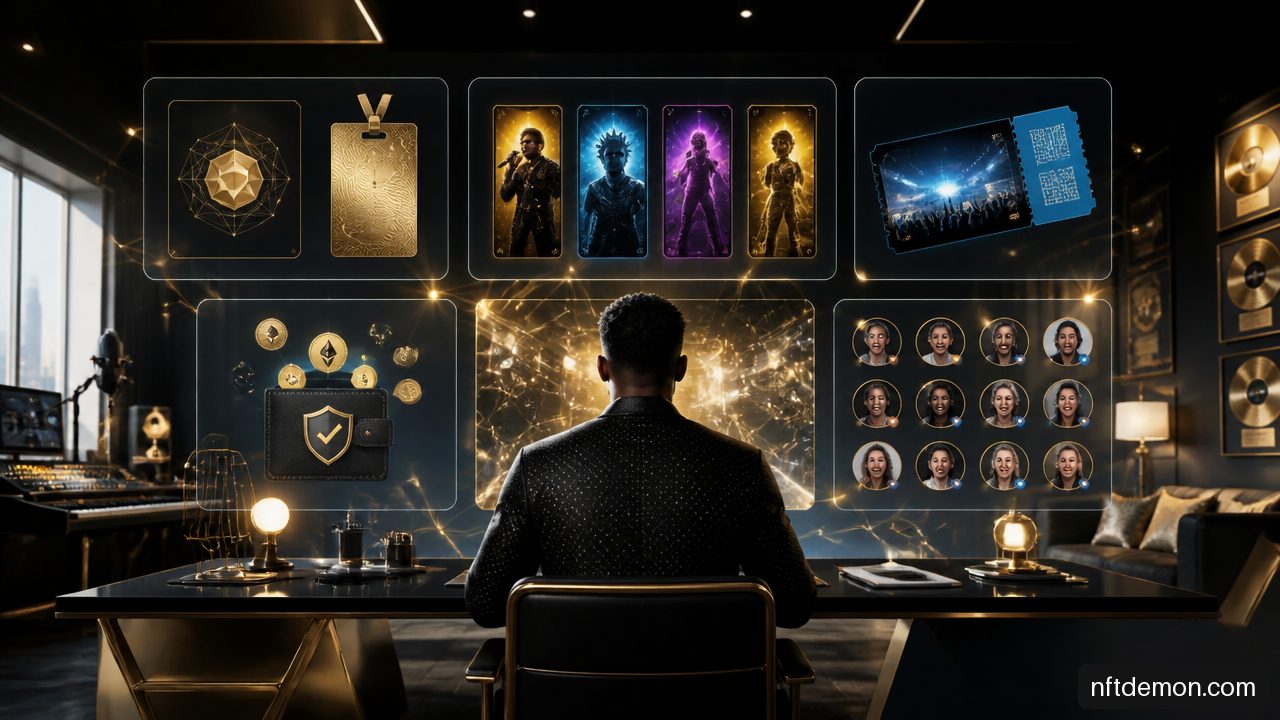
For decision makers, the real product is not the token itself. It is the system around it: the rights granted, the utility delivered, the community operations, the custody experience, the marketing language, and the plan for when expectations change. We recommend treating every NFT, access pass, or creator token as a customer promise with technical rails behind it.
- Key Takeaways
- Design The Token As A Rights And Obligations Product
- Build A Launch System Fans Can Actually Use
- Manage Legal, Reputation, And Operational Risk
- Frequently Asked Questions
- Sources And References
Key Takeaways
Start With Utility, Not Market Activity
The strongest creator programs make ownership useful on day one. A holder should understand exactly what they can access, how they redeem it, when it expires, and what happens if the creator changes the program. Trading volume and floor price may be visible, but they are not reliable measures of fan value.
Match The Asset To The Relationship
An NFT can work well for a limited collectible, a permanent proof of attendance, or a transferable premium pass. A nontransferable credential may be better for memberships, identity verification, or benefits tied to one person. A fungible token introduces liquidity, price volatility, and a more demanding legal and operational burden.
Build For Mainstream Fans
A public figure’s audience may include longtime crypto users, but it also includes fans who have never used a wallet. The purchase flow, recovery process, support plan, and fraud prevention controls can determine whether the program feels premium or confusing.
Treat Compliance And Rights As Product Requirements
Marketing language, royalty features, revenue sharing, copyright permissions, and consumer disclosures should be designed before the public announcement. A well designed token program should be clear about what it does not grant as well as what it does.
Design The Token As A Rights And Obligations Product
Choose The Right Structure Before Writing A Smart Contract
The first decision is not which blockchain to use. It is whether the audience needs a collectible, a membership credential, a liquid community asset, or a conventional loyalty program with blockchain components.
| Structure | Best Use | Avoid It When | Core Tradeoff |
|---|---|---|---|
| NFT collectible | Art, memorabilia, limited editions, proof of attendance | The only purpose is price speculation | Strong provenance, but utility may be thin |
| Transferable access NFT | Event passes, premium clubs, recurring experiences | Access must remain tied to the original purchaser | Resale can expand reach but complicates access control |
| Nontransferable credential | Membership status, verified fan identity, rewards | Collectibility or resale is central to the proposition | Better continuity, less tradable appeal |
| Fungible creator token | Broad community participation and defined ecosystem functions | The project lacks governance capacity, liquidity controls, or legal review | Flexible participation, much higher complexity |
| Conventional membership with token support | Mainstream fan clubs and subscription programs | Blockchain ownership is essential to the brand promise | Easier onboarding, less native portability |
A practical strategy often begins with one narrow function. Consider a musician offering a digital collectible that also serves as an annual concert presale credential. That is materially easier to explain than a token that promises access, voting, rewards, future drops, affiliate revenue, and potential appreciation all at once.
For deeper brand architecture, NFT strategy consulting for global brands can help frame tokenized ownership as a business program rather than a one time campaign.
Write A Rights Map Before You Announce Utility
Token ownership is not copyright ownership. It also does not automatically grant commercial rights to a person’s name, likeness, music, trademarks, images, scripts, or unreleased work. Those rights must be written down separately.
A rights map should answer the following questions in plain language:
• Who issues the asset? Identify the legal entity responsible for delivery.
• What does the holder receive? Specify access, content, event eligibility, discounts, voting rights, or license permissions.
• How long does the benefit last? State whether access is perpetual, annual, seasonal, or contingent on renewal.
• Can the asset be transferred? Explain whether the buyer can sell, gift, or delegate access.
• What intellectual property rights exist? Separate personal display rights from commercial use rights.
• What can change? Define reasonable modification rights, substitutions, cancellation procedures, and refund policies where applicable.
A token should never force fans to guess whether they bought art, access, membership, a commercial license, or an investment. Those are different products with different obligations.
This is particularly important for public figures with layered rights ownership. A celebrity image may involve photographer rights, agency approvals, trademark restrictions, publicity rights, and brand partner commitments. A music related NFT can involve master recording, composition, publishing, performer, and artwork rights. The NFT metadata may point to an image, but the rights agreement determines what the holder may actually do with it.
Define A Minimum Viable Community
A creator does not need a massive following to test tokenized utility. They do need a reachable, engaged group and the operational ability to support it. We recommend starting with a limited pilot when the team can identify a group of fans likely to attend, participate, provide feedback, and complete wallet onboarding.
Tokenized membership models can combine wallet based access with off chain content delivery, while immediate utility should be distinguished from investment expectations. That hybrid approach matters because a token does not need to contain every experience on chain. It can function as a verifiable key for a private video library, a ticketing portal, a physical event check in system, or a moderated community.
A minimum viable community should be judged by behavior, not follower counts. Look for evidence that people open messages, attend live sessions, buy limited products, contribute questions, or return for repeat experiences. A creator with 2,000 highly engaged supporters may have a better pilot base than a celebrity with 10 million passive followers.
Build A Launch System Fans Can Actually Use
Design The Smart Contract Around Operations
Smart contracts can issue tokens, control supply, record ownership, and communicate royalty preferences. They cannot independently ensure that a promised private event occurs, that a fan receives merchandise, or that a marketplace honors every royalty request.
The contract architecture should reflect the actual program:
Issuance rules: Set supply caps, minting windows, allowlists, pricing, and purchase limits.
Transfer rules: Decide whether the token is freely transferable, restricted, or nontransferable.
Metadata strategy: Store essential token data reliably and avoid putting sensitive personal information on a public blockchain.
Access verification: Connect wallet ownership to a secure off chain entitlement system.
Administrative controls: Document whether the issuer can pause minting, update metadata, replace a compromised access credential, or migrate systems.
Revenue splits: Define approved recipient wallets and agreement terms before sales begin.
Ethereum compatible networks remain common for NFT tooling, but chain selection should follow audience needs. A mainstream consumer launch may prioritize low transaction friction, familiar wallets, simple card payment options, and strong marketplace support. A high value collector program may prioritize provenance and ecosystem compatibility. The cheapest gas fees are not automatically the best choice if the fan journey becomes confusing.
For teams building a larger consumer program, Enterprise NFT strategy with measurable outcomes provides a useful framework for connecting technical choices to business metrics.
Price For Participation, Not Artificial Scarcity
There is no universal ideal edition size or price. Research does not provide dependable benchmarks across creator categories, audience sizes, and utility types. The better question is whether pricing supports the intended behavior.
For example, a $20 open edition commemorative NFT can be a low friction way to test checkout, onboarding, and interest. A $1,500 limited access pass may be appropriate only if it includes genuinely scarce benefits such as a small gathering, a studio session, or premium hospitality. The higher the price, the more exact the delivery obligations should become.
| Launch Method | Useful When | Main Risk | Better Measurement |
|---|---|---|---|
| Free claim | Identity capture and onboarding are the priority | Bots and low commitment claims | Verified wallets and repeat participation |
| Low cost open edition | Testing broad fan demand | Utility delivery may become overloaded | Conversion and activation rate |
| Limited paid edition | Capacity is genuinely scarce | Fans may interpret scarcity as investment framing | Redemption and renewal |
| Allowlist sale | Rewarding active community members | Perceived exclusion or favoritism | Retention of early supporters |
| Auction | The asset is a high value work or singular experience | Price can dominate the story | Qualified buyer satisfaction and delivery |
Do not make a “free” drop operationally free. It can still create gas costs, identity verification needs, support tickets, and bot pressure. A claim flow may need rate limits, human verification, wallet screening, or a phased invitation system.
Build The Fan Journey Before The Hype Cycle
The launch page should let a nontechnical fan understand the process in minutes. Explain whether they need a wallet, whether card payments are available, how they will receive the asset, where utility is redeemed, and who can help if something goes wrong.
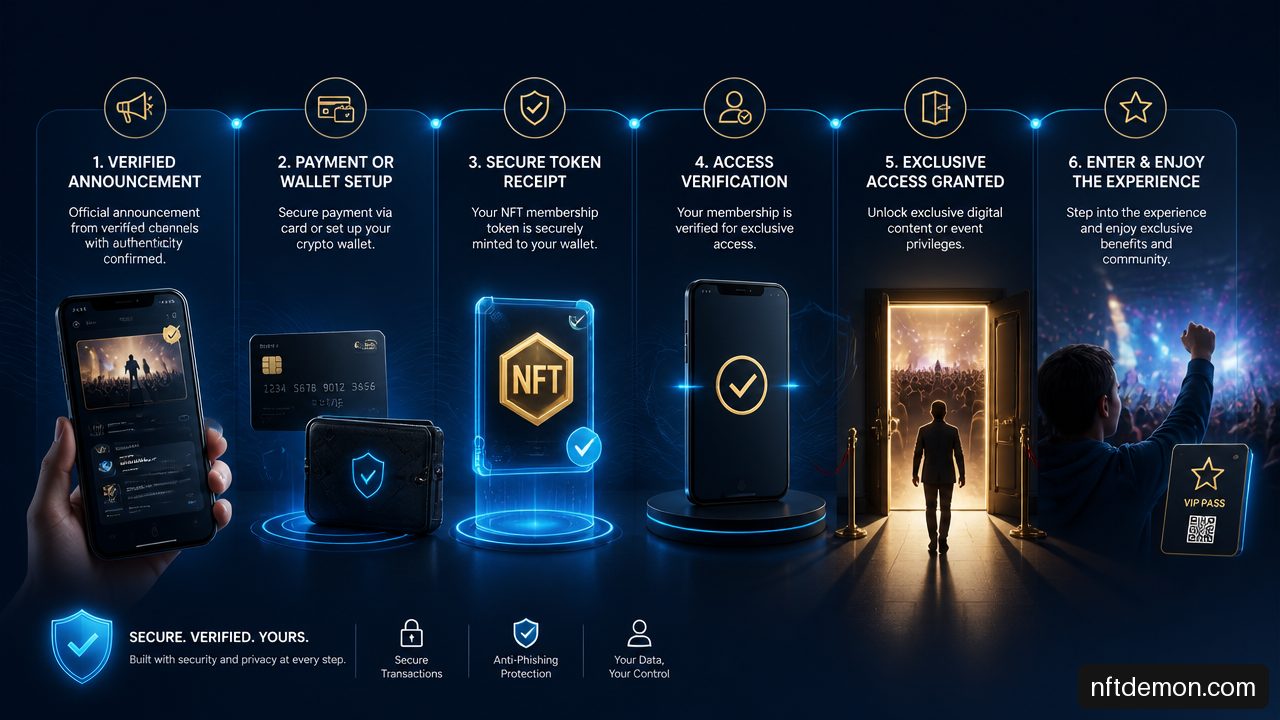
A reliable journey generally includes:
• A verified announcement hub linked from official social accounts.
• A simple eligibility and purchase page with rights disclosures.
• A wallet option that matches the audience’s technical comfort level.
• Clear warnings that staff will never request seed phrases or private keys.
• A support channel for failed payments, lost access, event questions, and suspected fraud.
• A post purchase activation sequence that gives the holder something useful immediately.
The last item is easy to overlook. If a fan buys a pass and then waits weeks with no confirmation, community energy disappears. A welcome message, private content release, event RSVP link, or digital badge creates an immediate proof that the program works.
For a fuller execution sequence, see How to plan an NFT project from concept to launch.
Manage Legal, Reputation, And Operational Risk
Keep Investment Language Out Of An Access Product
A public figure’s marketing can carry unusual influence. Statements about “getting in early,” future value, passive income, price growth, resale upside, or a team’s plans to increase token value can reshape how a regulator or consumer views the offer.
The U.S. Securities and Exchange Commission has indicated that public figure NFT marketing can create securities law issues when it emphasizes future creator efforts, royalties, expected value, or use of proceeds. This does not mean every NFT is a security. It means the economic design and the promotional story must be reviewed together.
The risk rises when a project combines several features:
• Promises of profit, appreciation, or resale opportunity.
• Revenue sharing, royalty distributions, or pooled proceeds.
• Liquidity incentives designed to promote trading.
• Ongoing managerial promises intended to raise token value.
• Fractionalized ownership of an asset marketed for financial return.
A token that represents future royalty payments is not simply a fan pass. A royalty token can represent a claim on future royalty payments and requires different economic and legal analysis from a membership NFT. Likewise, fractionalized NFTs and profit sharing features may raise securities law implications for creators and platforms.
Legal counsel should review the offering before campaign assets, influencer scripts, community moderator instructions, and sales pages are finalized. Late legal review is expensive because marketing language is often embedded in graphics, video, affiliates, and community expectations.
Do Not Promise Royalties You Cannot Enforce
ERC 2981 can communicate royalty information, but it does not force every marketplace or private transaction to pay a creator. Secondary sale royalties depend on marketplace behavior, contract design, payment token, and the path a buyer uses to resell.
Creator strategies commonly evaluate utility, royalties, holder retention, trading activity, and liquidity, but we recommend treating market signals as secondary to fan outcomes. A collection can have a rising floor price while failing to deliver meaningful access. It can also have limited trading while producing strong event attendance and repeat participation.
Where collaborators share proceeds, separate three issues:
Primary sale allocation: Who receives revenue when the token is first sold?
Secondary royalty preference: What percentage or amount is requested on supported marketplaces?
Contractual settlement: What written agreement governs disputes, tax responsibilities, wallet changes, and rights ownership?
A creator, manager, illustrator, photographer, producer, and community fund may all have legitimate claims. Smart contract splits help automate payment routing, but they do not replace contracts governing the underlying work.
Prepare For Failure Modes Before They Become Headlines
Public figure launches attract impersonators, phishing pages, opportunistic bots, hacked social accounts, and fans who assume every token price movement reflects insider action. A response plan should exist before the mint opens.
| Failure Mode | Preventive Control | Recovery Step |
|---|---|---|
| Fake minting website | Verified link hub and pinned official notices | Issue rapid takedown notices and publish a signed official alert |
| Social account takeover | Strong account security and preapproved emergency contacts | Pause promotions and redirect fans to the verified hub |
| Lost wallet access | Recovery guidance and account based support options | Apply documented replacement rules where technically possible |
| Inactive utility | Published calendar and accountable program owner | Offer substitution, extension, or clearly defined wind down terms |
| Bot dominated claim | Rate limits, allowlists, and human checks | Reserve a later allocation for verified fans |
| Token price backlash | Avoid investment marketing and monitor community messaging | Recenter communications on utility and rights, not price |
A utility expiration policy is especially valuable. If an access NFT promises annual benefits, say what occurs when the year ends. If a creator retires a membership program, disclose whether holders receive a final event, replacement digital item, refund consideration, or no further entitlement. Ambiguity is where reputational damage grows.
Frequently Asked Questions
Should A Creator Launch An NFT, A Fungible Token, Or A Token Gated Membership?
Choose an NFT when distinct ownership, collectibility, or limited access matters. Choose a token gated membership when recurring access is the main value. Consider a fungible token only when the community has a real ongoing function for it and the issuer can manage legal, liquidity, support, and reputation risks. For many public figures, a membership credential is the safer starting point.
What Real Benefit Should Fans Receive From Holding The Token?
The benefit should be specific, deliverable, and understandable before purchase. Good examples include presale access, verified attendance badges, limited community events, private content, merchandise eligibility, or voting on a clearly bounded creative choice. Avoid vague promises such as “future surprises” as the main value proposition.
Does Buying An NFT Give The Holder Copyright Or Commercial Rights?
Usually, no. Buying an NFT normally transfers ownership of the token, not copyright or broad commercial rights in the associated media. Any license must state what the holder can do, whether commercial use is allowed, whether the license can be transferred, and what happens if the token is sold.
Which Blockchain Is Best For A Mainstream Creator Audience?
The best chain is the one that reduces friction while supporting the needed wallet, marketplace, payment, and access tools. Mainstream audiences often benefit from low cost transactions, card payment options, and simple recovery support. High value collector communities may prioritize compatibility with established NFT ecosystems. Test the full purchase flow before making the choice.
Can NFT Royalties Be Enforced On Every Secondary Sale?
No. Royalty information can be encoded, but collection depends on marketplace support and transaction routes. A resale completed outside a marketplace that honors the royalty preference may not generate payment. Budget as though secondary royalties are uncertain rather than guaranteed recurring revenue.
How Can A Public Figure Avoid Making A Token Look Like An Investment?
Lead with present utility, clear rights, and realistic delivery. Avoid price predictions, profit language, liquidity promotion, promises that future creator efforts will increase value, and messaging that encourages fans to buy for resale. Obtain legal review for the full offer, including social posts and affiliate content.
What Metrics Show That A Token Strategy Is Working?
Measure outcomes tied to the program’s actual promise: verified purchases, successful wallet activation, utility redemption, event attendance, repeat participation, membership renewals, support ticket volume, fraud incidents, and conversion from existing fan channels. Floor price and trading volume can be monitored, but they should not become the operating scorecard.
Sources And References
U.S. Securities and Exchange Commission + Blockchain Association Letter Request — https://www.sec.gov/files/ctf-written-blockchain-association-letter-08-08-2025.pdf
ChainScore Labs + Direct-to-Fan Tokenized Memberships — https://chainscorelabs.com/use-cases/music-streaming-and-creator-monetization/creator-monetization-and-fan-engagement/direct-to-fan-tokenized-memberships
ChainScore Labs + Royalty Token: Definition & How It Works — https://chainscorelabs.com/glossary/nft-technologies-and-metadata/nft-royalty-and-licensing/royalty-token
Platform Executive + Blockchain and NFT-Driven Media Distribution — https://www.platformexecutive.com/insight/media-research/blockchain-and-nft-driven-media-distribution-2025-2030/
CryptoRBX + NFTs and Web3 Creator Monetization Trends Explained — https://cryptorbix.com/en/b/nfts-web3-creator-monetization-trends
NFT Demon Holdings helps enterprises scope, evaluate, and build blockchain programs — start with a free evaluation call.
Talk through your use case
Free evaluation call — objective, constraints, and fit, before any proposal.